
.png)
Choosing between two materials might seem simple. If one has a lower carbon footprint, it may look like the better option. But that's only part of the picture.
Material decisions involve more than a single number. Lifespan, replacement cycles, performance, comfort, durability, and project priorities can all change the outcome.
With Kasper, our AI Material Advisor for the built environment, these factors can be explored through a simple conversation, using verified product and sustainability data from revalu.
Here are four questions that show how a basic comparison can lead to a more informed decision. Compare materials with Kasper.
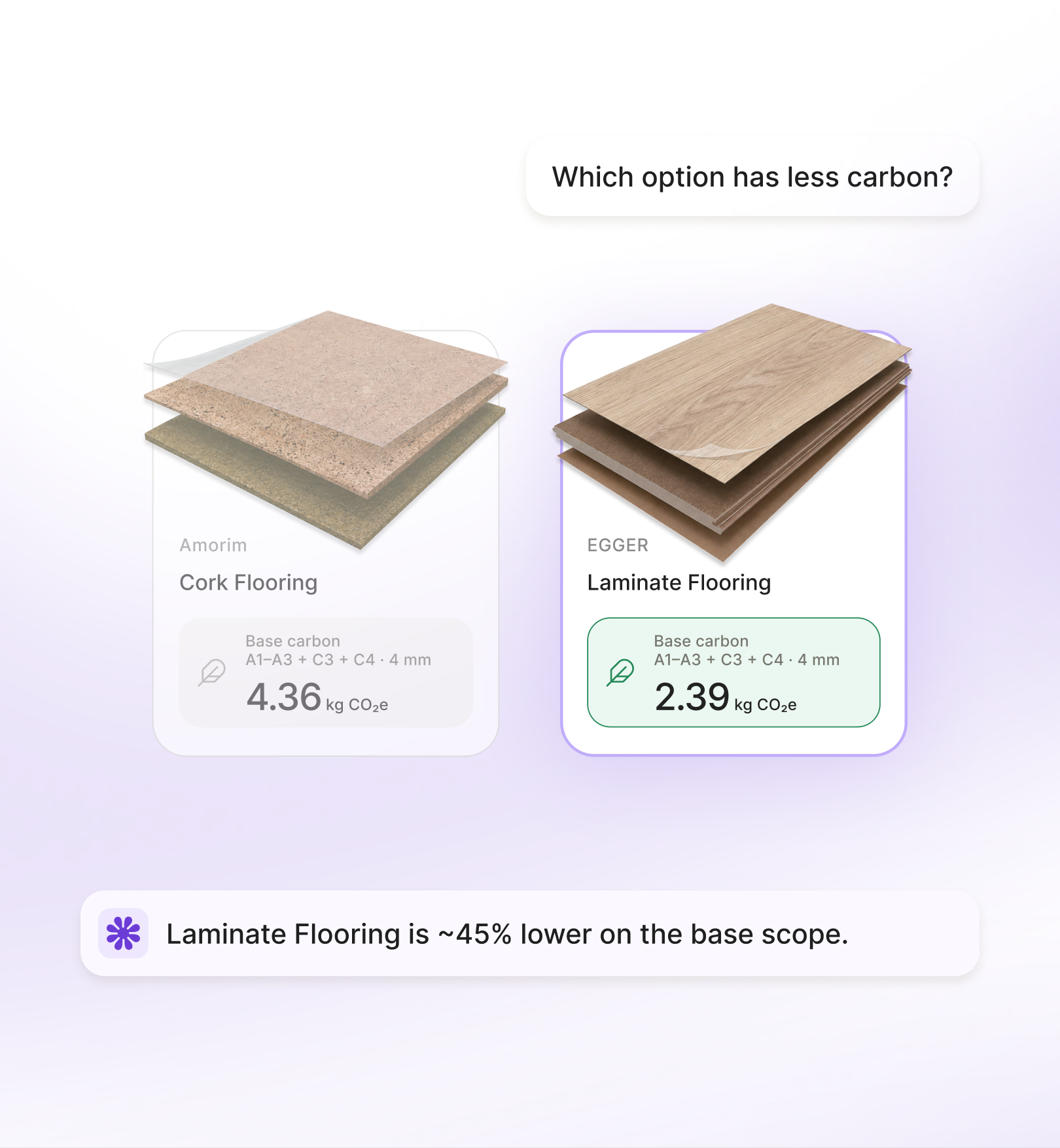
A direct comparison is a good place to start.
In this example, we compare two specific flooring options—one cork and one laminate. Based on their initial carbon impact:
Cork flooring: 4.36 kg CO₂e/m²
Laminate flooring: 2.39 kg CO₂e/m²
The laminate option is approximately 45% lower.
But this only tells us what happens initially. What happens over the life of the project?
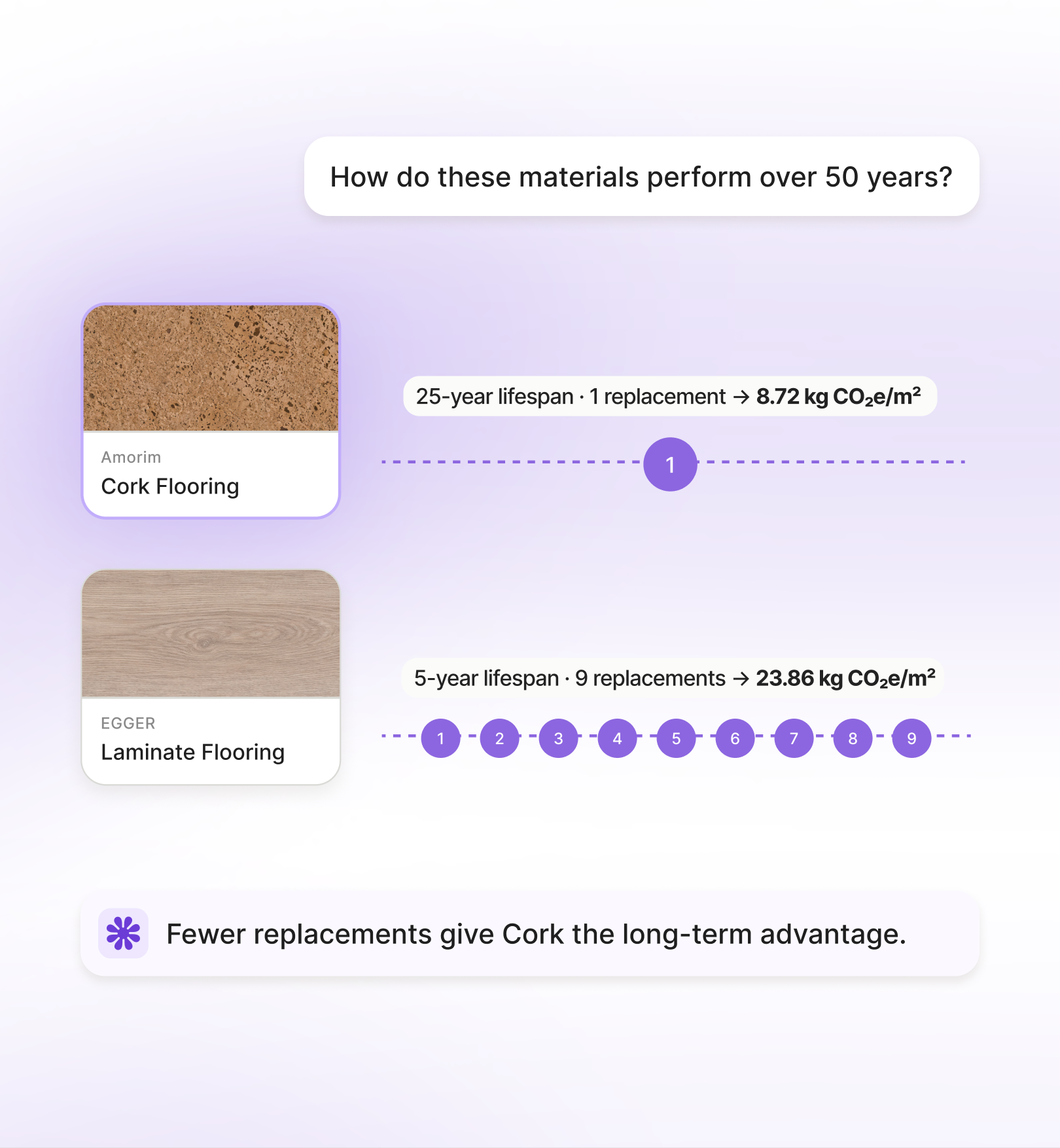
This is where service life changes the picture.
The cork flooring has a reference service life of 25 years, resulting in one replacement within 50 years. The laminate has a reference service life of 5 years, resulting in nine replacements.
Including those replacements:
Cork flooring: 8.72 kg CO₂e/m²
Laminate flooring: 23.86 kg CO₂e/m²
The option with the lower initial impact is no longer the one with the lower calculated carbon impact over 50 years.
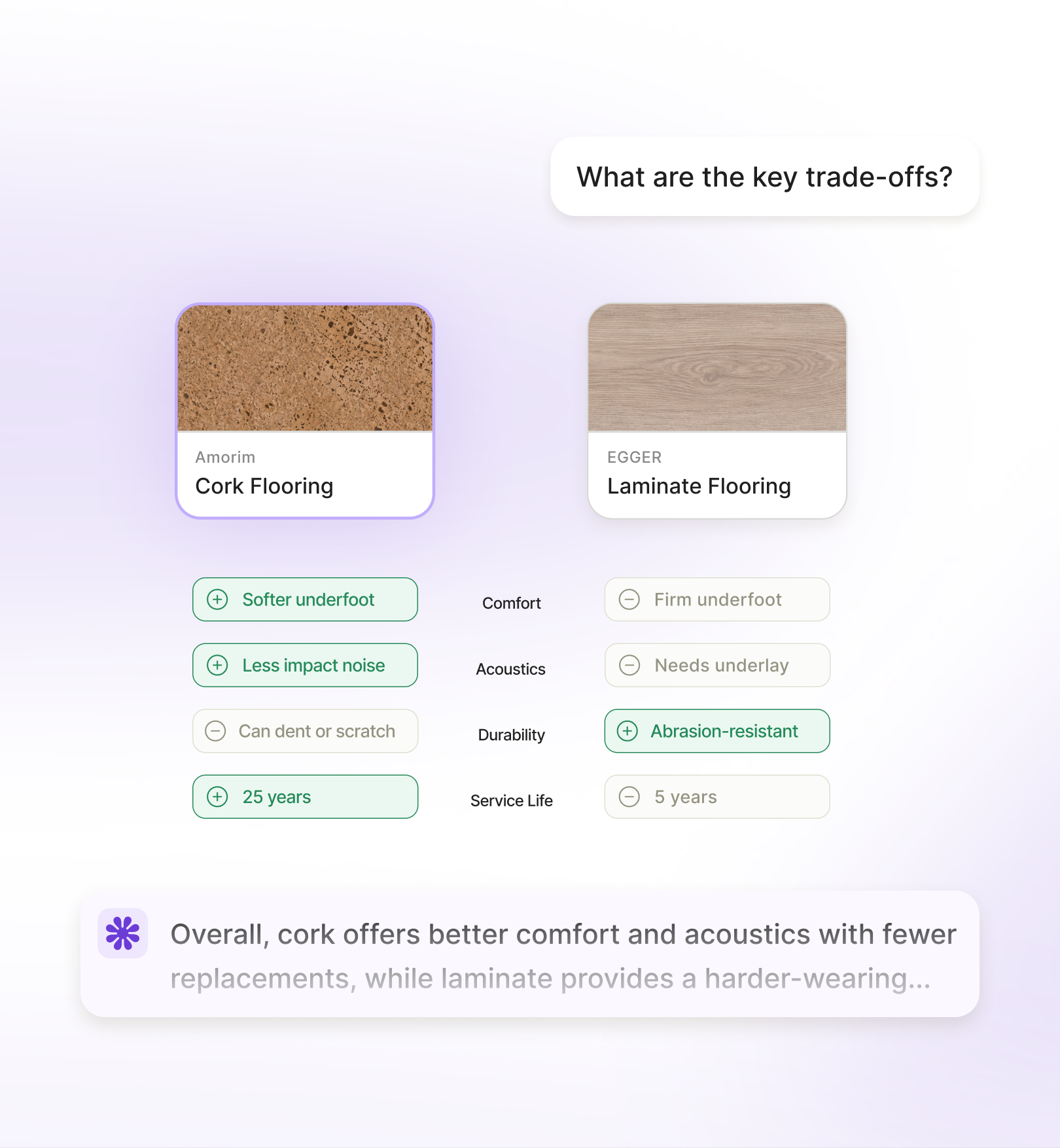
Carbon is only one part of the decision.
Depending on the specific products and application, cork can offer advantages in comfort and acoustics, while laminate can provide a harder, more abrasion-resistant surface.
Durability, maintenance, moisture resistance, cost, and other requirements can also influence the choice.
There isn't always a universally "best" material. The question is which trade-offs best match the priorities of your project.
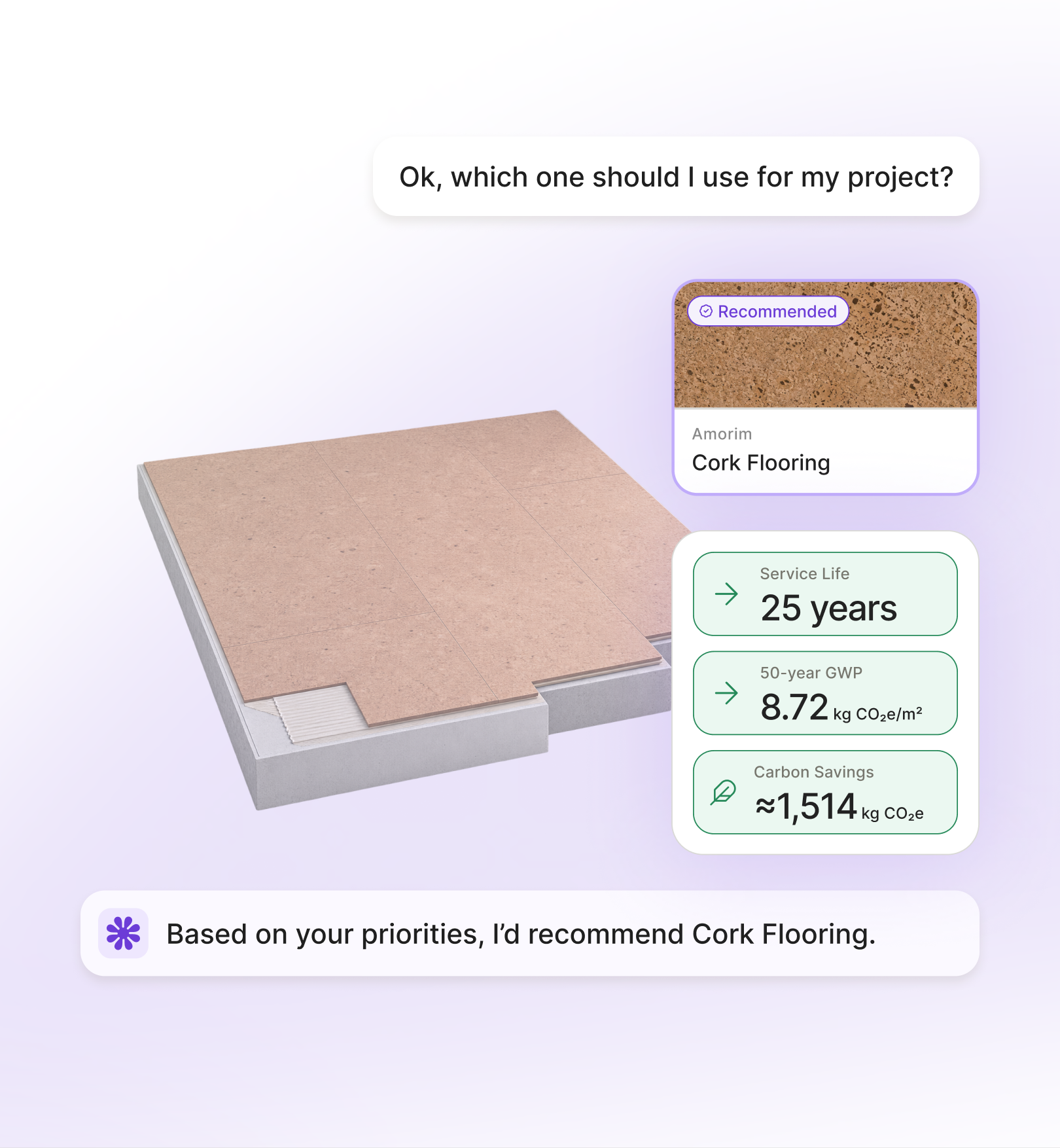
Once those priorities are clear, the comparison can become a recommendation.
For the assumptions in this example, cork emerges as the stronger fit. Its longer reference service life means fewer replacements and approximately 1,514 kg CO₂e less over 50 years for 100 m² of flooring, while also offering potential comfort and acoustic benefits.
With different products, requirements, budgets, or priorities, the conclusion could be different.
That's precisely the point.
Material comparison shouldn't stop at "Which has the lowest number?" It should reveal what each option means for the project over time.
With Kasper, you can compare product data, explore long-term impacts and trade-offs, and identify the option that best fits your project—in minutes instead of hours of manual research.
Ready to compare materials for your own project?

.png)
.png)
.png)
.png)
.png)
.png)














.png)
.png)
.png)
.png)
.png)
.png)
.png)
.png)
.png)
.png)
.png)
.png)
.png)
.png)
.png)
.png)
.png)
.png)
.png)
.png)
.png)
.png)
.png)
.png)
.png)
.png)
.png)
.png)
.png)
.png)
.png)
.png)
.png)
.png)
.png)
.png)
.png)
.png)
.png)
.png)
.png)
.png)
.png)

.png)
.png)
.png)
.png)
.png)
.png)
.png)
.png)











.png)










.png)