.png)
Reducing embodied carbon is easier when you start early, while there’s still flexibility to change materials, systems, and design decisions.
But the data needed to act can be scattered. Materials need to be matched with environmental data, a carbon baseline established, and the biggest opportunities for reduction identified.
With Kasper, our AI Material Advisor for the built environment, you can bring these steps into a single conversation using verified product and environmental data from revalu.
Here are four steps to move from material data to actionable carbon reductions.
Start optimizing your project with Kasper.
Start with the information you already have about the project.
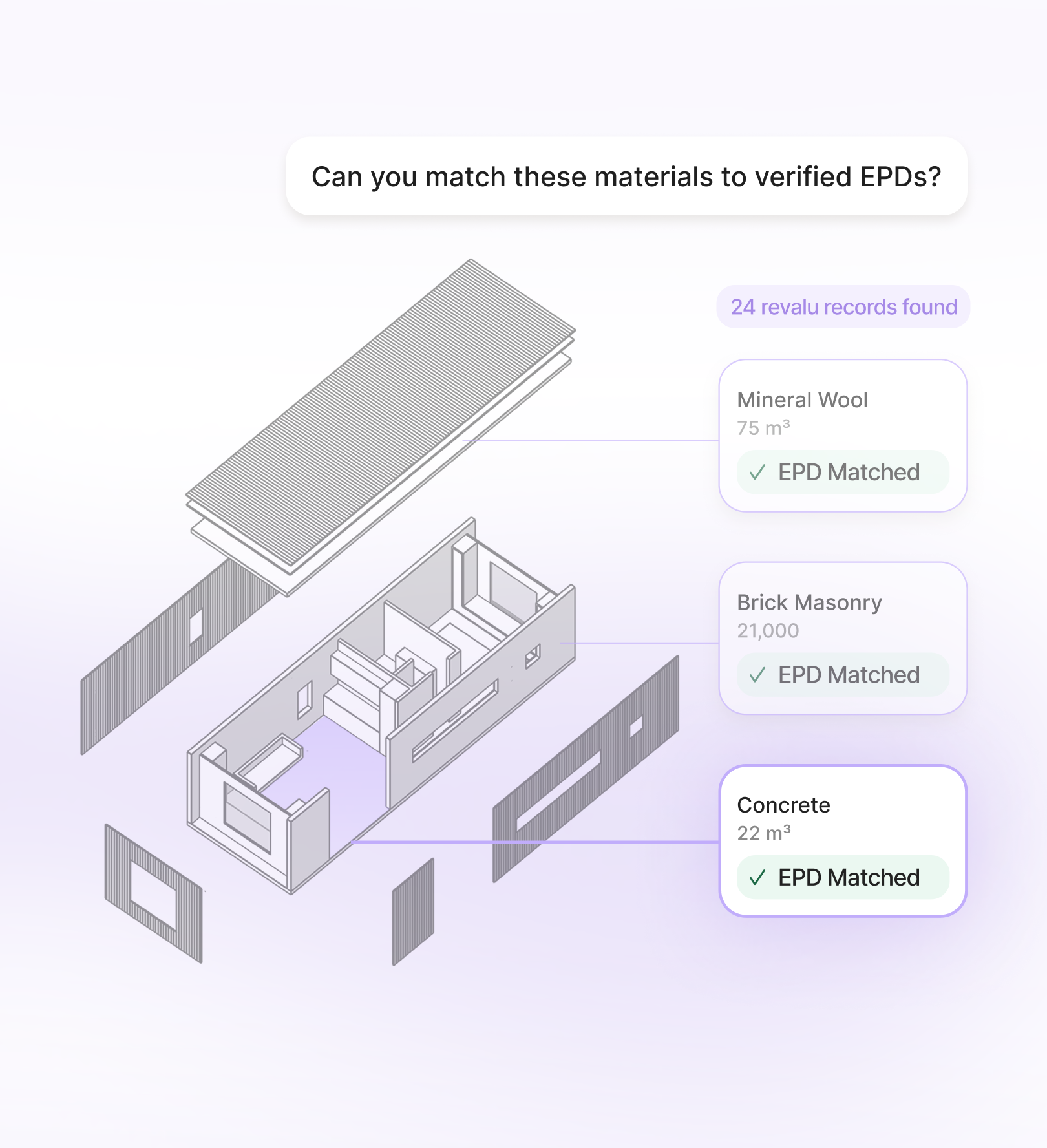
Kasper can help match your building materials and quantities with relevant Environmental Product Declaration (EPD) data, creating a stronger foundation for assessing the project’s embodied carbon.
In this example, building materials including mineral wool, brick masonry, and concrete are matched with relevant EPD data available through revalu.
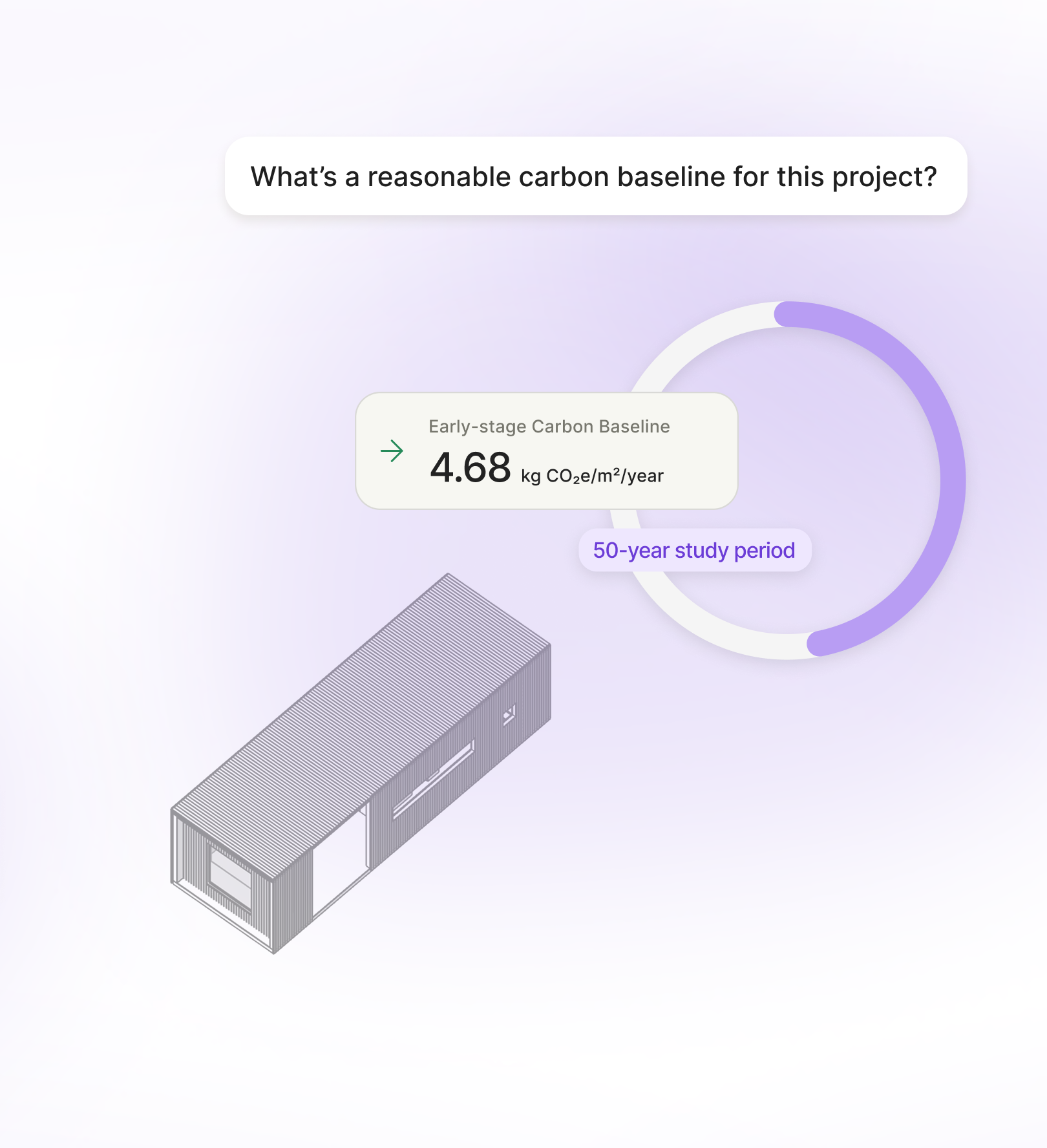
Once the materials are connected to environmental data, you can establish an early-stage carbon baseline for the project.
Using the assumptions in this example, Kasper calculates:
Early-stage carbon baseline: 4.68 kg CO₂e/m²/year
Study period: 50 years
This provides a benchmark for understanding the project’s current carbon impact and measuring what happens when different material choices are tested.
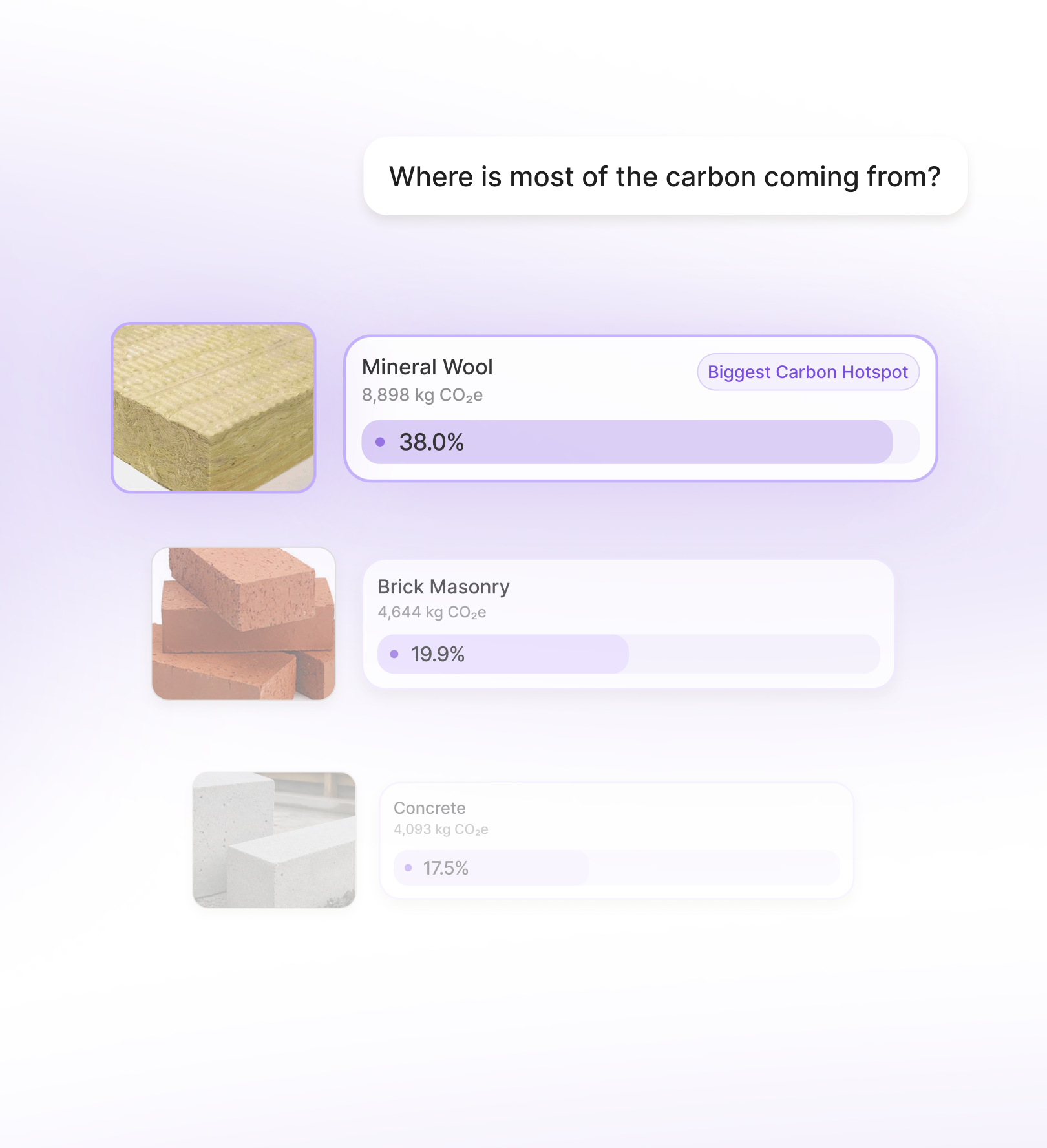
Not all building materials contribute equally to a project’s carbon footprint. Instead of trying to optimize everything at once, Kasper can help identify which materials account for the largest share of the calculated impact.
In this example:
Mineral wool: 38.0%
Brick masonry: 19.9%
Concrete: 17.5%
Mineral wool is the biggest carbon hotspot in this calculation, making it a logical place to investigate lower-carbon alternatives first.
Once the biggest carbon hotspot has been identified, you can test alternative materials and see how they affect the project’s carbon baseline.
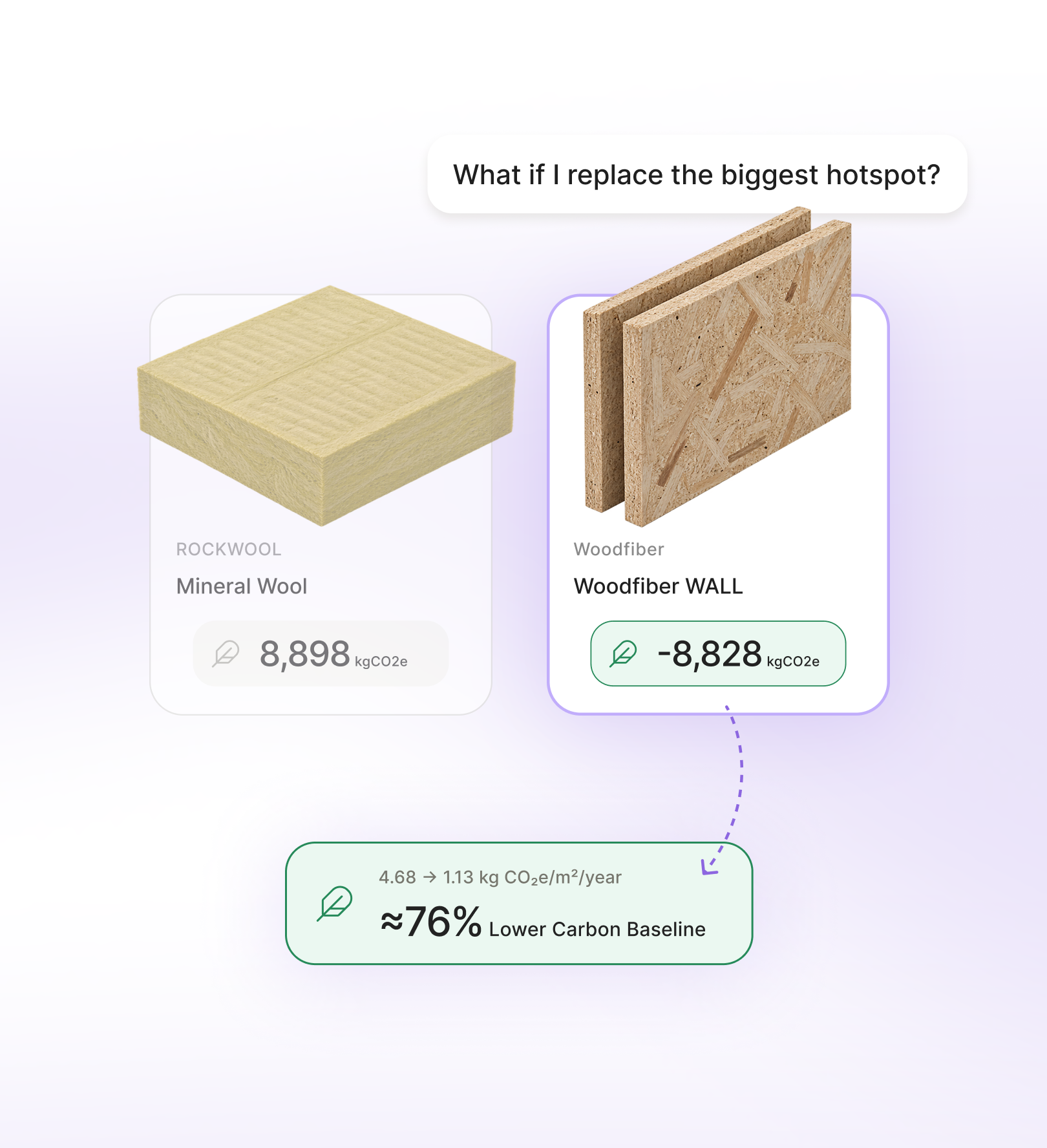
In this example, replacing the mineral wool with a wood fiber alternative changes the calculated carbon baseline from: 4.68 → 1.13 kg CO₂e/m²/year
For the assumptions used in this example, that represents an approximately 76% lower carbon baseline.
The goal isn’t simply to calculate embodied carbon once the design is complete. It’s to use carbon data early enough to influence material and design decisions.
By matching building materials with EPD data, establishing an early-stage carbon baseline, identifying carbon hotspots, and testing lower-carbon alternatives, Kasper can help make embodied carbon assessment an active part of the design process.
And because these steps happen in a single conversation, you can explore different material options, compare their impact, and iterate as the project develops—in minutes instead of hours of manual research.
Ready to start reducing embodied carbon earlier?

.png)
.png)
.png)
.png)
.png)
.png)













.png)
.png)
.png)
.png)
.png)
.png)
.png)
.png)
.png)
.png)
.png)
.png)
.png)
.png)
.png)
.png)
.png)
.png)
.png)
.png)
.png)
.png)
.png)
.png)
.png)
.png)
.png)
.png)
.png)
.png)
.png)
.png)
.png)
.png)
.png)
.png)
.png)
.png)
.png)
.png)
.png)
.png)
.png)
.png)
.png)

.png)
.png)
.png)
.png)
.png)
.png)
.png)
.png)











.png)








.png)