.jpg)
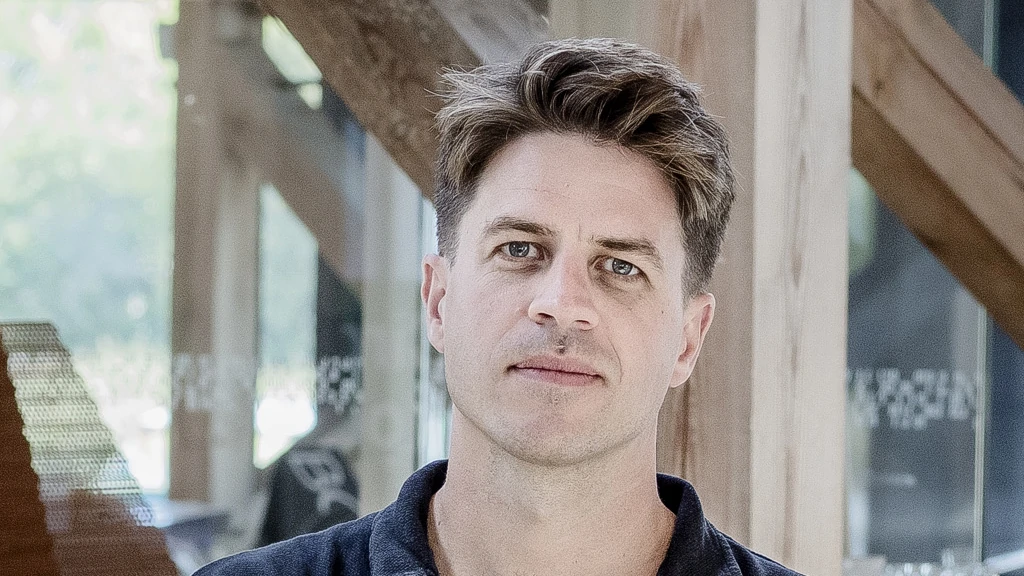
Alexandra Nikolova is the co-founder of n/a, an architecture and design studio based in Copenhagen that works exclusively with bio-based and recyclable building materials. Guided by a humanistic and pragmatic approach, the studio develops projects at all scales, placing sustainability at the core of its practice.
At n/a, this commitment translates into a curated collection of over 200 bio-based materials, organized across all aspects of construction, from foundations to interiors. Through continuous experimentation and built projects, the studio refines how these materials are applied in practice, contributing to more circular and resource-conscious construction methods.
Alexandra holds a Master of Science in Architecture from Aalborg University and has worked at international studios in Beijing, London, and Copenhagen. Her work brings together technical, artistic, and humanistic perspectives to create architecture that is both functional and forward-thinking.
The studio’s guiding principle—“never boring / always bio-based”—reflects a clear ambition: to redefine architecture through sustainable, material-driven design.
Our work is driven by a strong ambition to expand knowledge and develop new construction methods using bio-based materials—refining this further by finding solutions and materials without plastic binders or flame retardants.
We focus on pilot projects where we continuously test, learn, and improve on previous solutions. Each project builds on lessons from earlier ones, allowing us to refine our approach and deepen our understanding of how to use bio-based materials most effectively.
A key driver is experimentation—exploring how these materials can be applied in practical construction, while also improving their competitiveness with conventional methods in terms of labor and efficiency. At the same time, bio-based solutions already offer clear advantages, particularly in reducing CO₂ impact and creating healthier indoor environments.
Another important focus is scalability: taking the solutions we have proven in smaller projects and developing them so they can be implemented on a much larger scale.
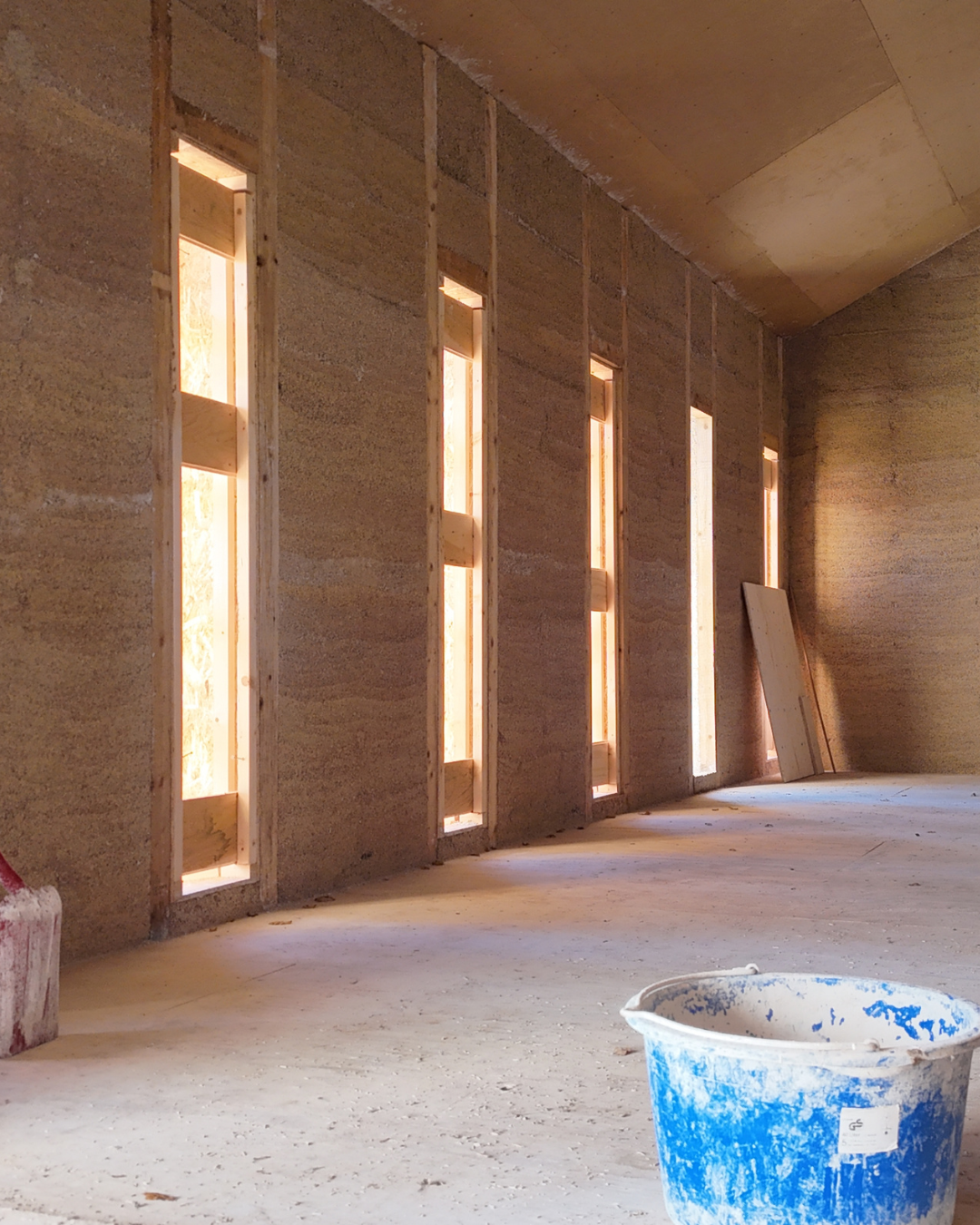
Sustainability, for us, means taking a holistic approach while making very concrete material choices. In practice, we prioritize bio-based solutions wherever possible, and when those are not available, we choose the best recycled alternatives. It is about reducing environmental impact while still delivering high-quality, buildable solutions.
A big part of our approach is experimentation. Through pilot projects, we test new ideas and develop solutions that are carefully thought through in collaboration with experts across disciplines. These projects are not just about innovation for its own sake—they are meant to demonstrate that we need to rethink how we build and to show that alternative approaches are both viable and valuable.
The biggest challenge in the built environment is not a lack of solutions, but a lack of knowledge and willingness to change among key stakeholders. While architects and clients are increasingly open to new approaches, and policymakers are starting to move in the right direction, major barriers remain—particularly within large companies’ risk departments and insurance systems.
These actors often rely on established standards and can be hesitant to adopt new materials and methods, even though there is already substantial data and many proven examples globally. This creates a bottleneck that slows down the transition toward more sustainable, bio-based construction.

Architects should reconsider any material made from virgin, non-renewable resources—especially those with a high CO₂ footprint. A key example is materials based on sand, such as concrete. Sand extraction is one of the most resource-intensive processes globally, and when combined with cement production, it results in significant environmental impact.
More broadly, the industry needs to question its reliance on materials that are energy-intensive to produce and difficult to reuse or recycle.
Instead, we should prioritize materials from renewable sources—ideally those that can be grown and sourced locally. Bio-based materials not only reduce embodied carbon but also support circularity and often contribute to healthier indoor environments.
Reconsidering materials is not just about substitution, but about rethinking the entire logic of what we build with and why.
Given the current global crises—resource scarcity, geopolitical instability, and rising energy costs—I believe we will see a much stronger shift toward locally sourced, renewable building materials. As fossil fuels become more expensive and less reliable, economic pressure will accelerate this transition, often even more than environmental concerns alone.
While it may be a difficult reality, major change in the built environment is often driven by necessity rather than intention. These pressures will push the industry to rethink supply chains and rely more on what is available locally.
As a result, the built environment by 2050 should be healthier, more circular, and far less dependent on resource-intensive materials. Bio-based solutions will play a central role—not only because of their lower carbon footprint, but also because they contribute to better indoor environments and can be integrated into regenerative material cycles.
Ultimately, buildings should be designed as part of a local ecosystem—using renewable resources, storing carbon, and supporting both environmental and human health.

In our case, we do not spend much time convincing clients. We are very clear about our position—we only work with bio-based materials and decline projects that do not align with that approach. As a result, we naturally attract clients who share the same vision and ambitions. This allows us to focus our energy on developing better building solutions rather than justifying them.
Instead of convincing, we aim to inspire. Through our projects, we demonstrate that bio-based construction is not only possible, but also desirable—both environmentally and architecturally.
To scale this approach across the industry, the key factor is demand. Every stakeholder—from architects and developers to policymakers—needs to take responsibility and insist on better material choices. When demand for bio-based materials increases, production will scale accordingly, making these solutions more accessible and cost-competitive.
A critical but often overlooked part of this transition is the role of risk and insurance systems. Insurance companies, in particular, need to modernize their frameworks and better integrate existing knowledge and data about bio-based materials. Their current hesitation can significantly slow down adoption.
Once these barriers begin to shift, we will likely see increasing pressure on conventional material producers to adapt—either by developing lower-impact alternatives or by investing in emerging bio-based solutions. Encouragingly, this shift has already started, and we expect it to accelerate in the coming years.
Explore more of Nikolova’s work at n/a and discover related materials on revalu.

.png)
.png)
.png)
.png)
.png)
.png)











.png)
.png)
.png)
.png)
.png)
.png)
.png)
.png)
.png)
.png)
.png)
.png)
.png)
.png)
.png)
.png)
.png)
.png)
.png)
.png)
.png)
.png)
.png)
.png)
.png)
.png)
.png)
.png)
.png)
.png)
.png)
.png)
.png)
.png)
.png)
.png)
.png)
.png)
.png)
.png)

.png)
.png)
.png)
.png)
.png)
.png)
.png)
.png)