Material decisions have become one of the most complex aspects of project delivery across the AEC industry. Teams must balance performance requirements, regulatory compliance, environmental impact, cost, availability, and design intent, often across multiple disciplines, stakeholders, and project phases.
Yet the information supporting these decisions remains fragmented. Architects, engineers, sustainability specialists, specifiers, and procurement teams often work across disconnected spreadsheets, PDFs, BIM objects, and supplier data, forcing repeated research and decisions based on individual experience rather than shared knowledge. When information is scattered, confidence drops and effort increases.
The challenge is not so much a lack of material data, but trusting and reusing the knowledge firms already have to reduce risk and friction. Questions naturally arise: Will this material be approved? Has it worked before? Will it create problems later? Do we need to research everything again?
Confidence reduces risk, ease lowers effort, and material selection improves when both work together.
Confidence in material decisions rarely comes from a single dataset or specification sheet. It emerges from a combination of signals that reduce uncertainty across the design process, especially when material knowledge becomes structured, comparable, and reusable, supported by:
When these elements are missing, teams often return to familiar materials to minimize risk. Rather than restarting evaluation on every project, firms benefit from environments where approved materials, past assessments, and technical insights remain accessible across teams—creating a single source of truth for material decisions.
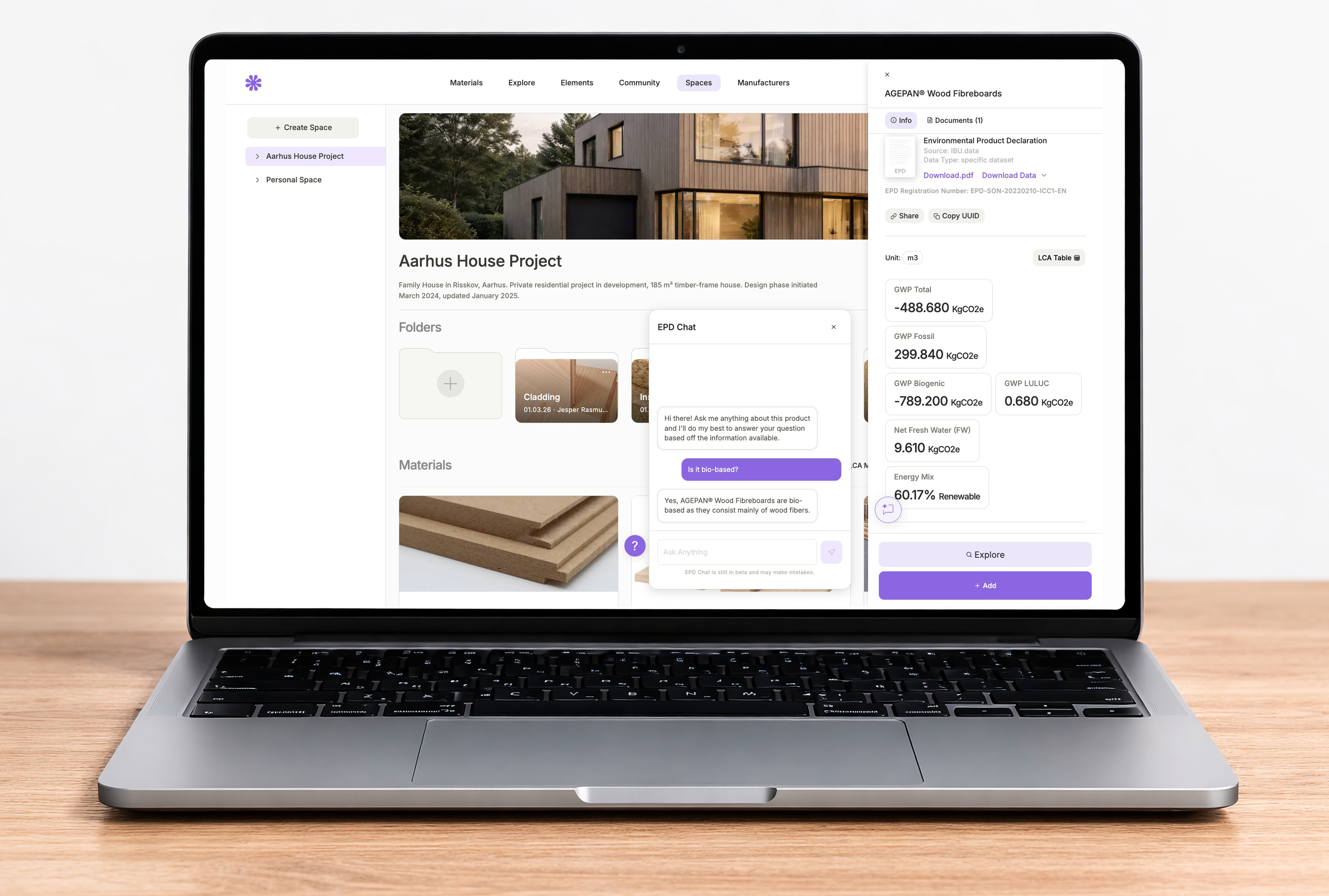
This is the foundation of revalu Spaces.
revalu Spaces complements revalu’s vast database of verified materials with a collaborative workspace where firms structure material knowledge once and continuously reuse it. Rather than a document archive, Spaces functions as a shared decision environment where approved material libraries help teams move faster without restarting research from zero. Materials already evaluated by colleagues become trusted starting points for new projects, reducing approval risk and increasing decision confidence.
At the same time, workflows become easier: information appears where decisions happen and evolves across project phases instead of being recreated. Material knowledge grows with each project, remaining accessible, traceable, and ready to support future decisions.
revalu Spaces operates around a set of core principles:
1. Shared Material Knowledge Across the Firm
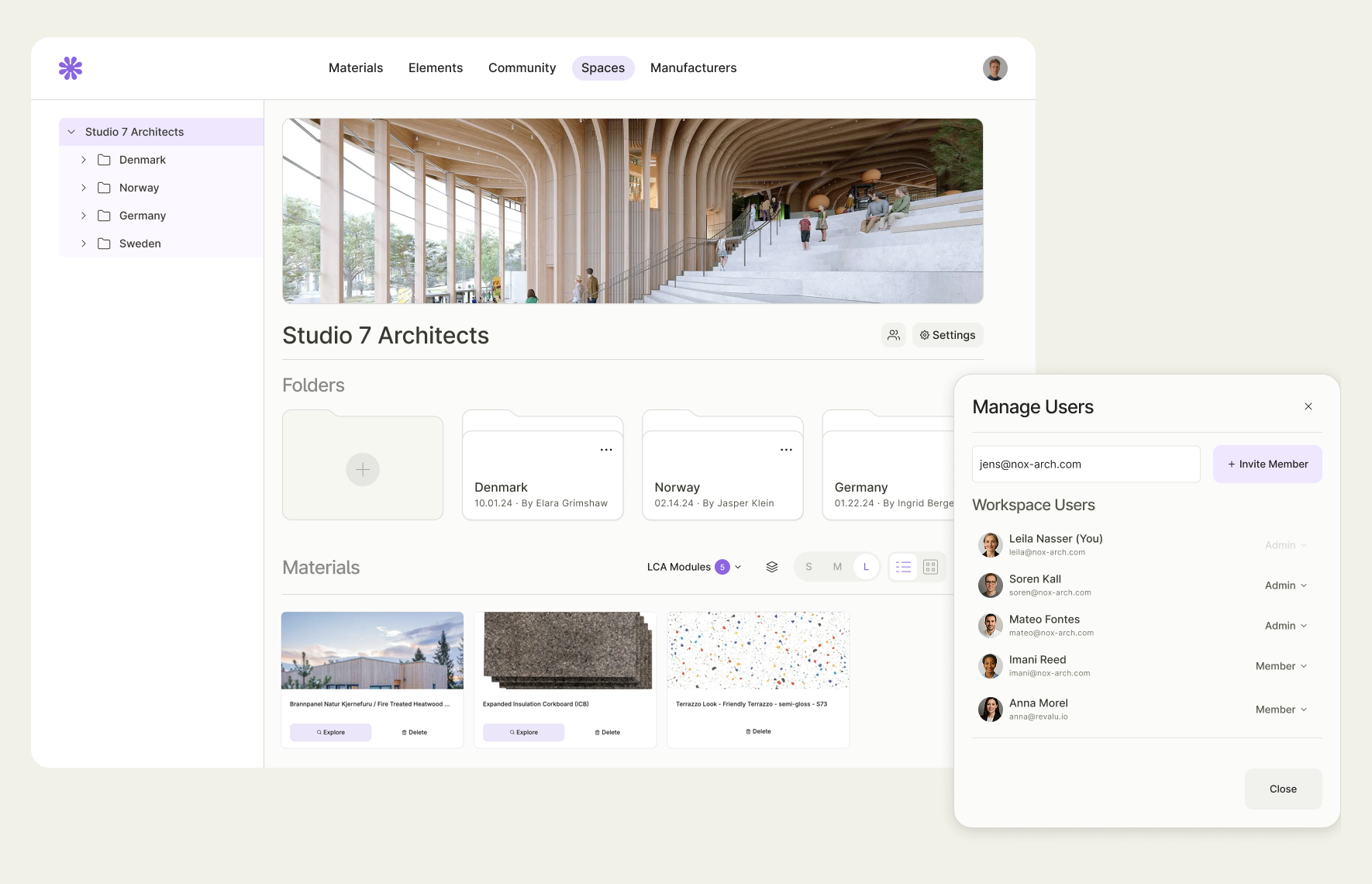
Spaces provides a centralized environment where material libraries, research folders, and project knowledge are accessible across teams. Instead of parallel investigations, firms build a collective reference system:
The same material adapts to different professional perspectives:
This shared visibility transforms individual research into reliable institutional knowledge.
2. Governance Without Friction
Confidence depends on clarity about who validates information. Spaces combines structured roles with flexible permissions:
Open collaboration and controlled access coexist, allowing firms to maintain quality assurance while avoiding coordination overhead. Teams collaborate without creating additional meetings, exports, or approval bottlenecks.
3. Structured Organization That Matches Real Workflows
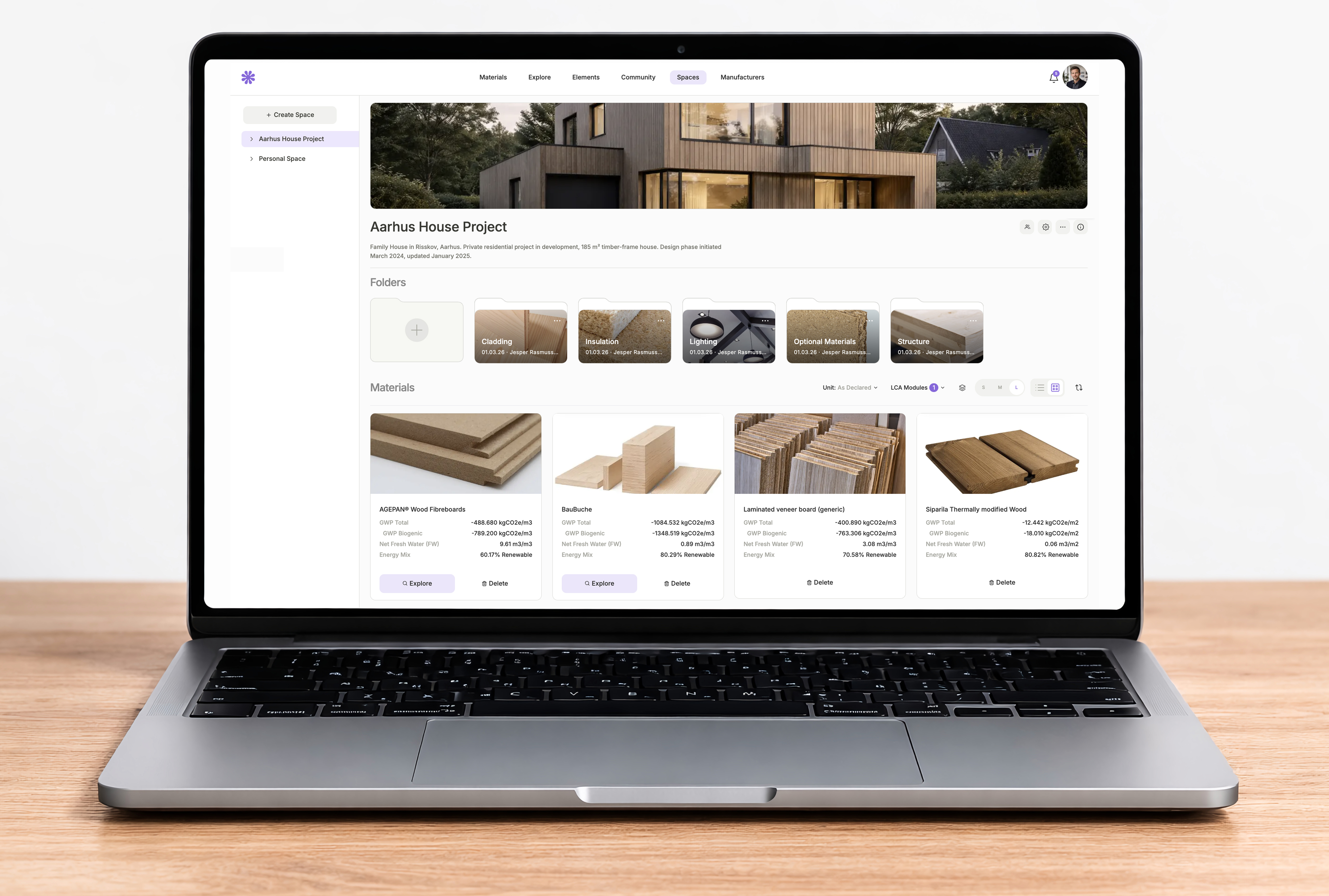
Material information can be organized according to how project decisions actually unfold:
Sorting improvements and drag-and-drop organization help maintain clarity as libraries expand. Instead of searching across disconnected folders, teams quickly locate trusted materials and move forward with decisions.
4. Reuse Instead of Repetition
Ease in material selection comes primarily from reuse. Spaces enables firms to consolidate existing research and continuously improve their material libraries by:
As projects accumulate, material intelligence grows stronger:
Each project strengthens the next instead of restarting the learning process.
5. Connected Workflows and Integrated Tools
Material selection does not happen in isolation. It spans early design exploration, detailed specification, and environmental assessment. Spaces connects material knowledge across workflows through APIs and integrations with:
Materials evolve from early concepts to detailed specifications without re-entering data or rebuilding lists. The same material object accompanies the project from initial exploration to final documentation, supporting both confidence and ease throughout the design lifecycle.
As performance requirements and regulations continue to evolve, organizations that structure material knowledge gain a measurable operational advantage. With collaborative workflows in revalu Spaces, teams can reduce the time spent searching, verifying, and recreating material information by 35% or more, allowing project teams to focus on design quality rather than data management.
Over time, material knowledge becomes part of a firm’s operational foundation instead of remaining tied to individual projects or personal memory. Decisions rely on verified shared knowledge, workflows require less coordination, and each project strengthens the next, helping AEC teams design buildings that perform better, adapt faster, and respond more intelligently to their context.

.png)
.png)
.png)
.png)
.png)
.png)















.png)
.png)
.png)
.png)
.png)
.png)
.png)
.png)
.png)
.png)
.png)
.png)
.png)
.png)
.png)
.png)
.png)
.png)
.png)
.png)
.png)
.png)
.png)
.png)
.png)
.png)
.png)
.png)
.png)
.png)
.png)
.png)
.png)
.png)
.png)
.png)
.png)
.png)

.png)
.png)
.png)
.png)
.png)
.png)
.png)
.png)