.jpg)
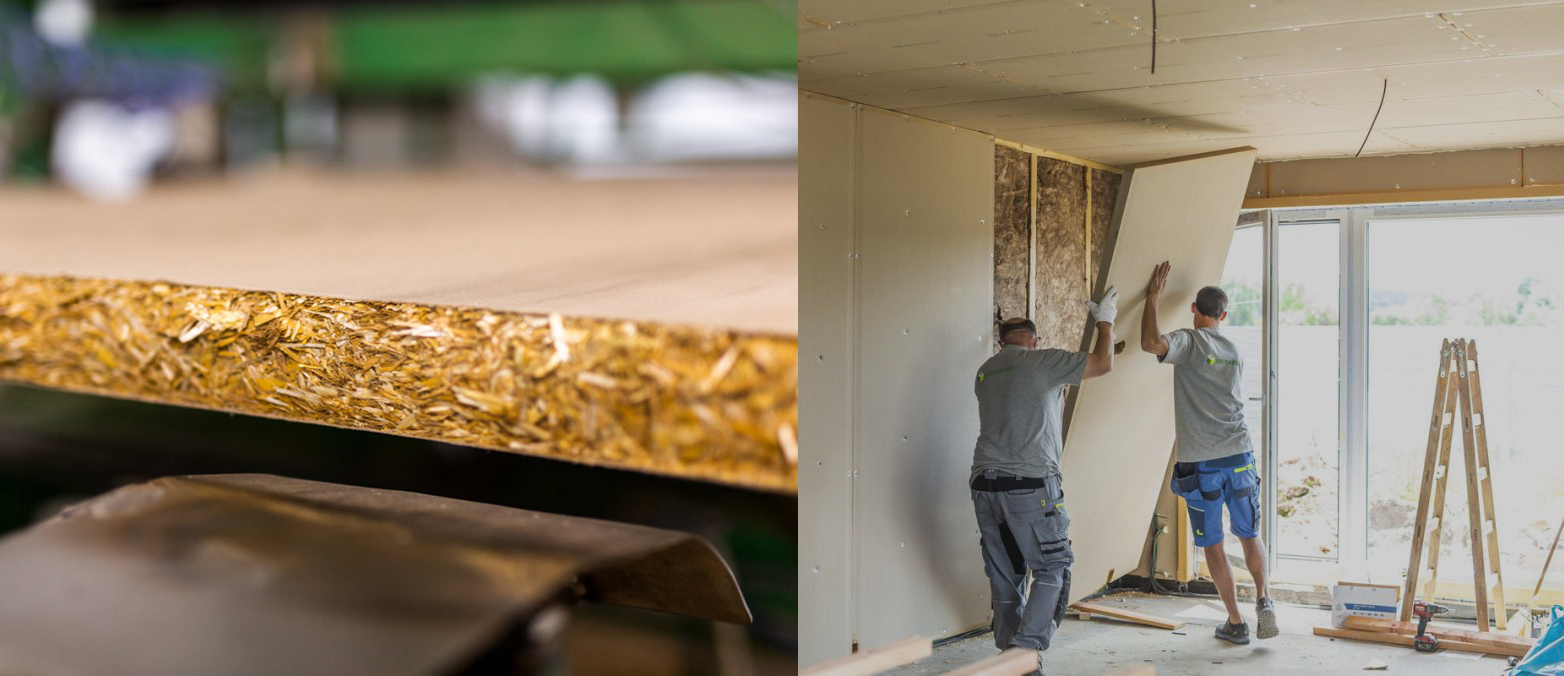
Compressed straw boards have been manufactured in the Czech Republic since 1999 and are now widely used in timber residential construction across Central Europe and beyond. Produced under the Ekopanely system, what began as an alternative building approach has evolved into a reliable solution applied across different housing scales, from compact cabins and small-footprint dwellings to single-family houses and multigenerational residential buildings.
Made from agricultural straw compressed under high pressure without synthetic binders, these rigid panels are installed within timber or metal framing systems as part of walls and partitions. They provide mass, rigidity, and thermal and acoustic performance within the wall assembly. Low-carbon, bio-based, and fully recyclable, the system transforms an agricultural by-product into a durable building component.
While suitable for multiple building types, its impact is especially visible in housing, where material decisions are repeated at scale. The following examples illustrate how compressed straw boards function as integral envelope components across diverse timber residential contexts.
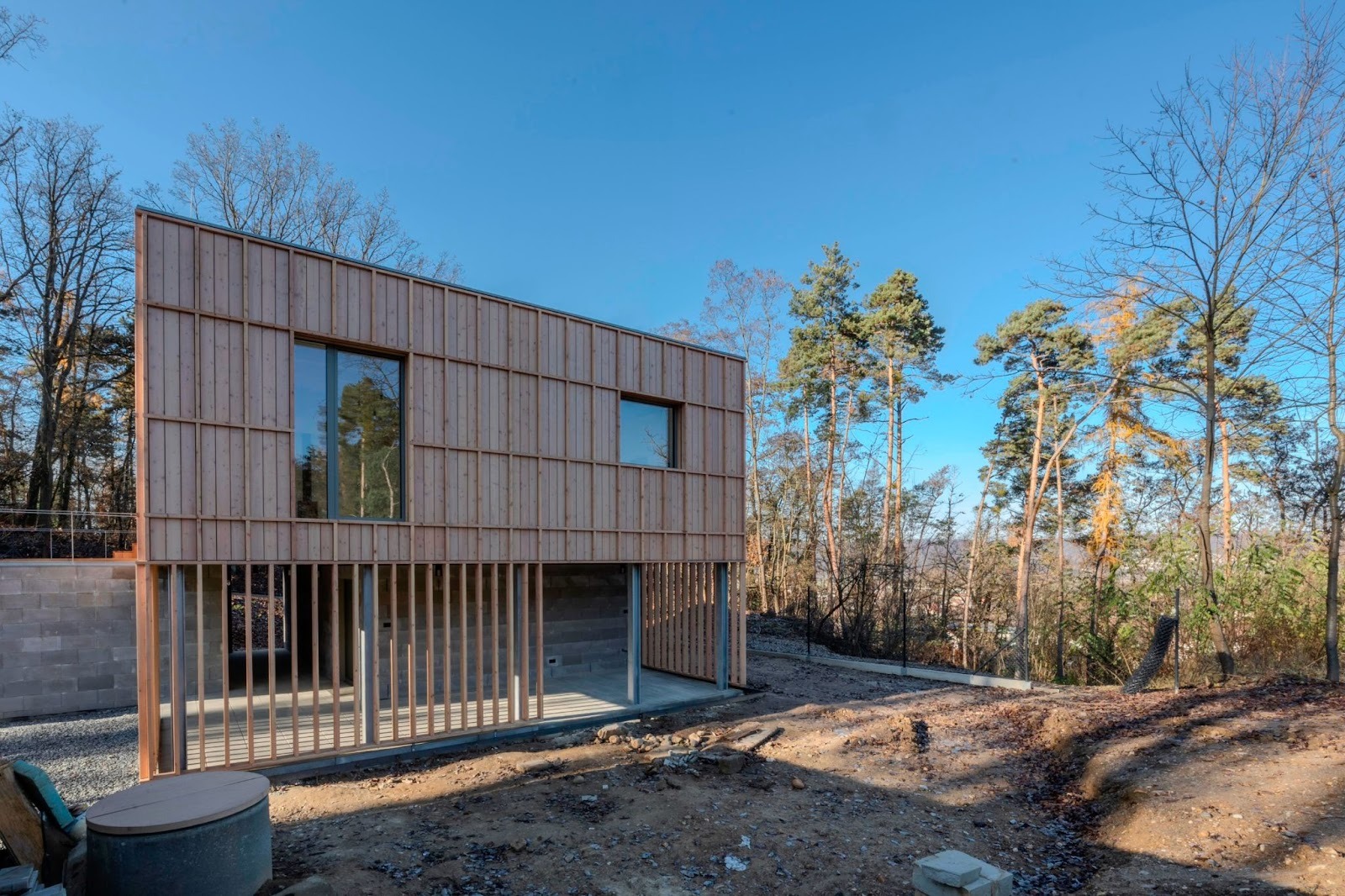
Designed by MOD architekti near Prague, Czech Republic, this 160 sqm single-family home combines conventional masonry and bio-based construction within a single volume. The ground floor is built in brick, while the upper storey follows a timber structure incorporating Ekopanely boards within the wall assembly. Rather than replacing traditional construction entirely, the project shows how compressed straw boards can be selectively integrated into hybrid residential structures.
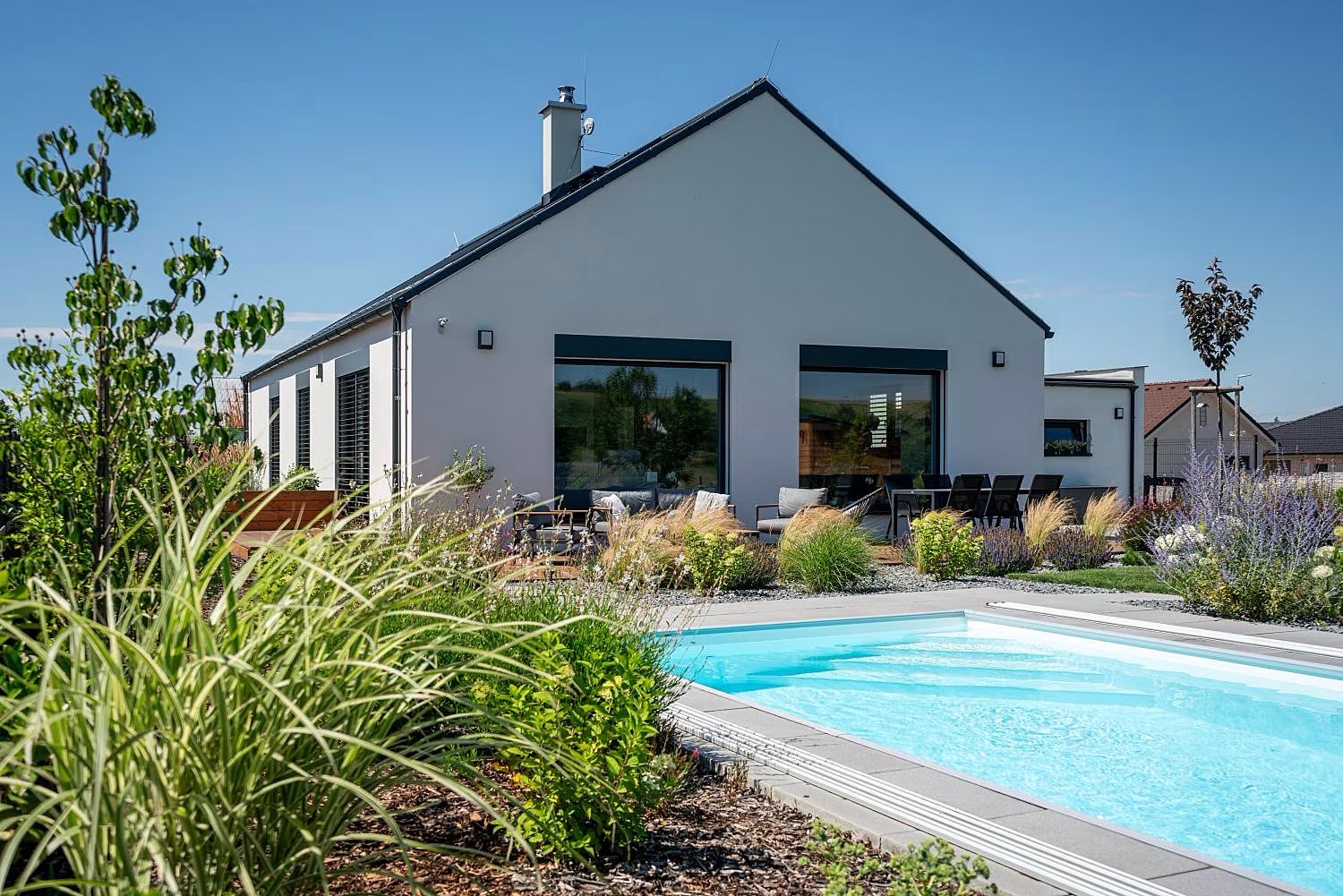
This 140 sqm single-family wooden house was designed according to the standard ALFA 140 model and later adapted to the client’s needs. Located in eastern Czech Republic, it was built with a lightweight timber frame and the diffusion-open EKO2 wall system. The wall achieves a U-value of 0.19 W/m²K, and the house is classified as energy class A under Czech regulations.
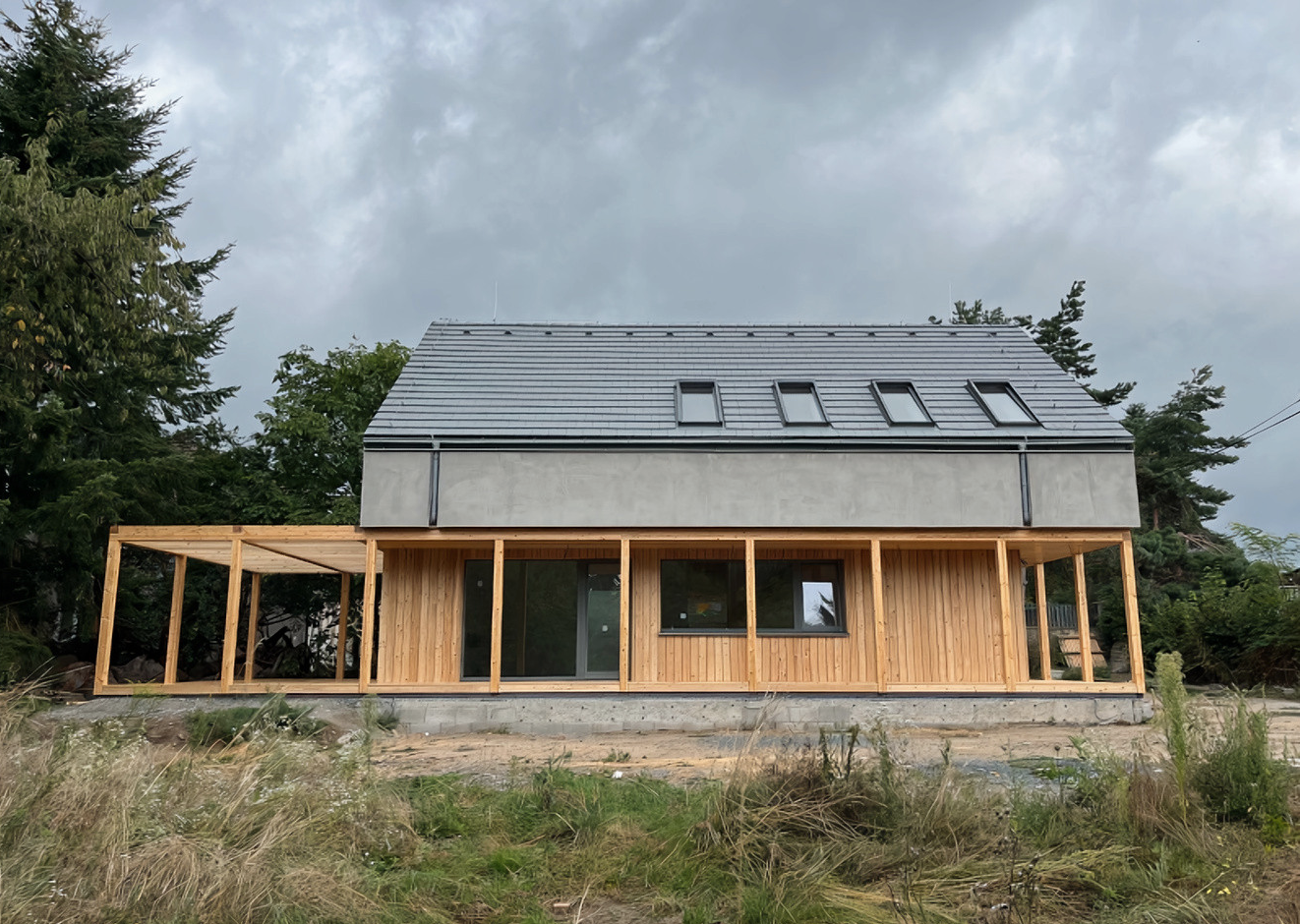
This two-storey single-family home east of Prague features a lightweight timber frame across both levels. Designed by MOD architekti, the project incorporates compressed straw boards into the timber wall assemblies as part of the building envelope. The exterior combines planked timber cladding at ground level with a smooth grey finish above, while the compressed straw core remains embedded within the wall structure.
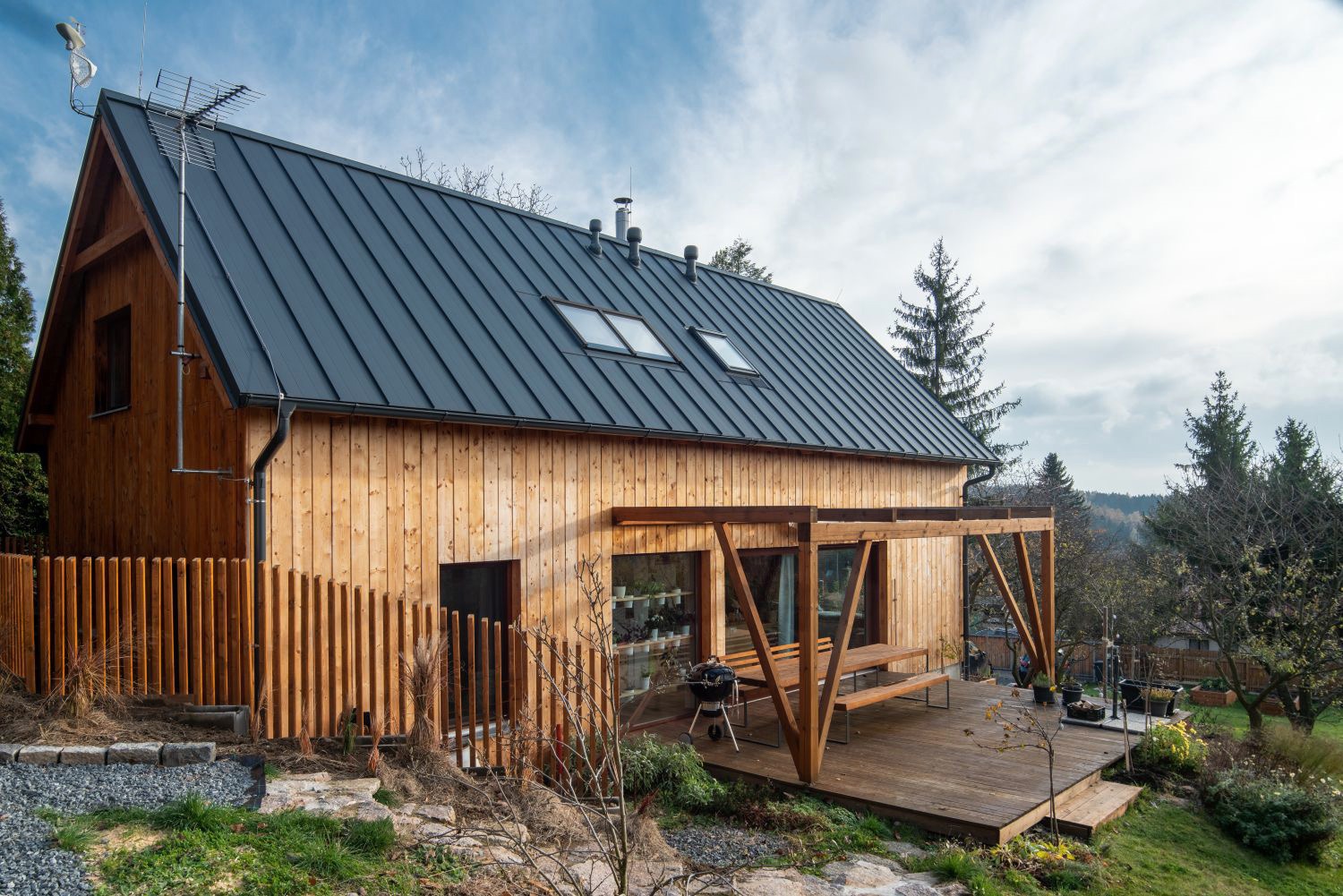
This single-storey detached house with a habitable attic has a built-up area of 93 sqm. After developing numerous layout variants themselves, the owners commissioned OTA ateliér to refine the architectural concept, following the typology of a traditional gabled house located near the forest. The structure is built as a timber frame incorporating compressed straw boards within the wall assembly. A ventilated timber façade completes the exterior envelope.
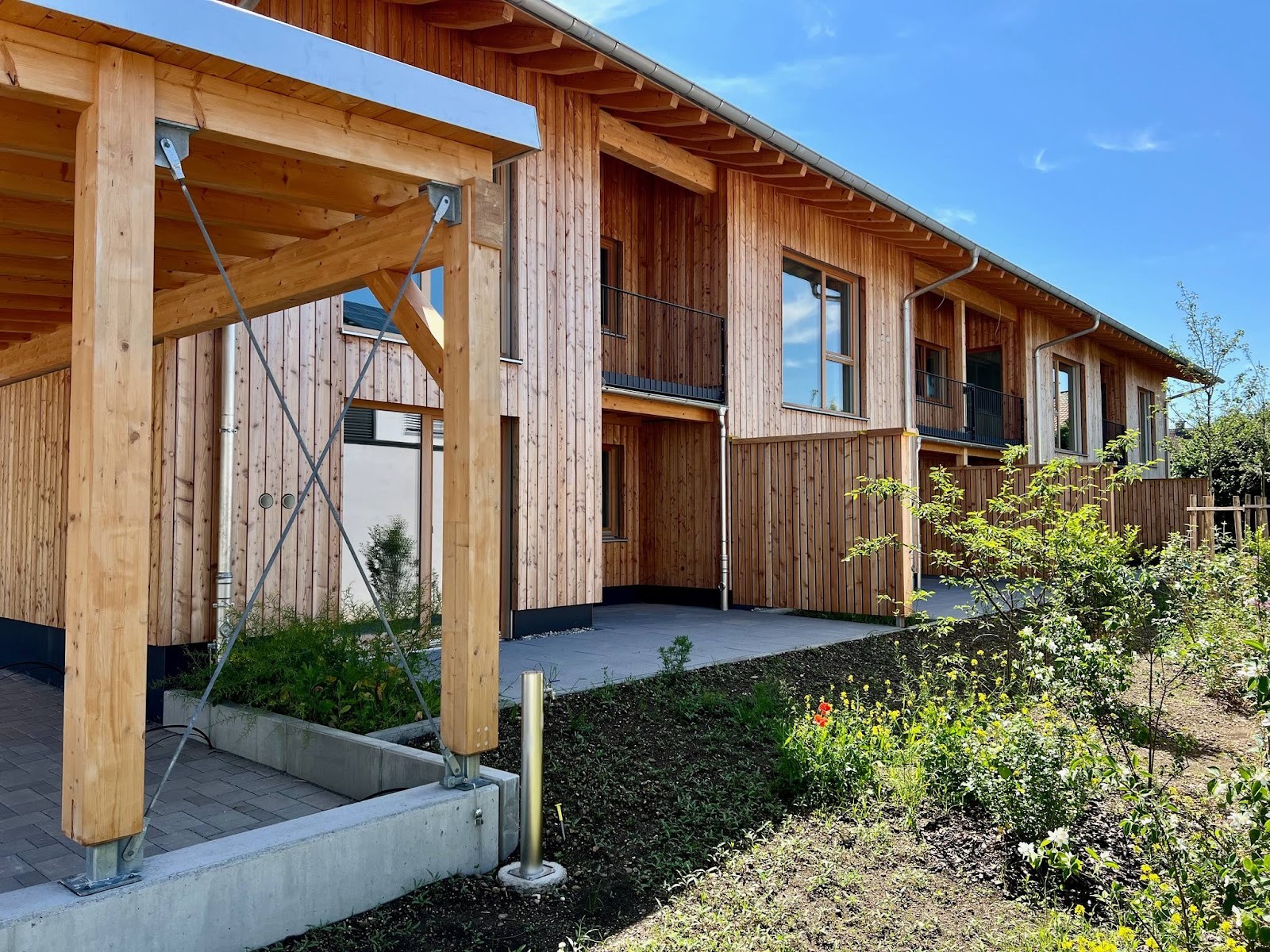
This multigenerational residential building in southern Germany uses a structural system combining cross-laminated timber (CLT) exterior walls, laminated timber (BSH) beams, and CLT floor slabs. Within this mass timber framework, the interior partitions are formed with compressed straw boards, primarily in a double-frame configuration to enhance acoustic separation. Approximately 3,000 m² of panels were supplied in collaboration with iStraw.
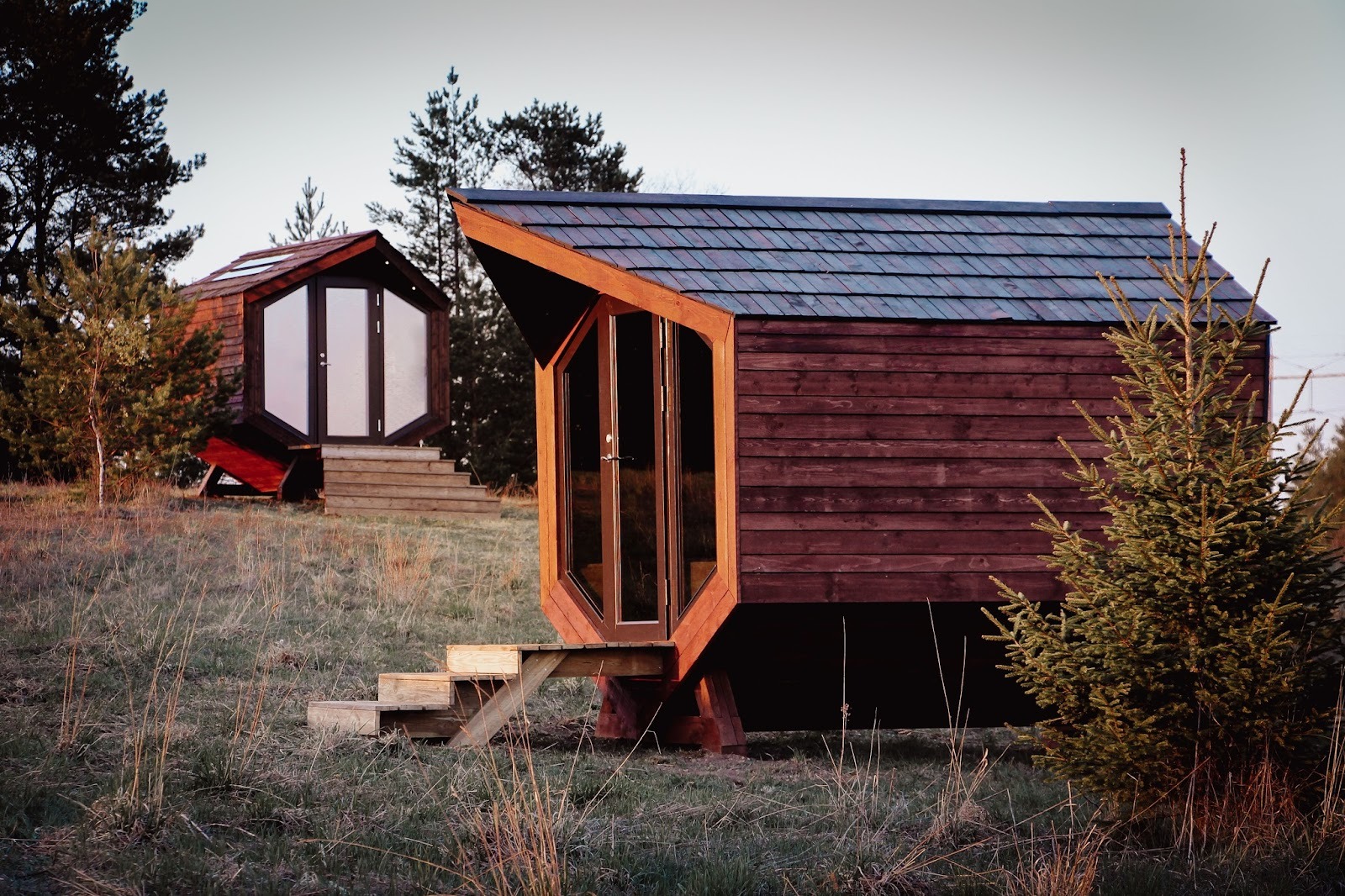
At the most compact end of the housing spectrum, compressed straw boards play an essential role in shaping the building envelope of the Estonian KÄRG tiny houses. Designed as off-grid dwellings for year-round use, the cabins depend on envelope performance to maintain indoor stability across demanding climates. Combined with a 150 mm layer of cellulose insulation, the wall assembly provides thermal stability, acoustic comfort, and humidity regulation within a compact footprint.
Across these projects, compressed straw boards operate not as experimental prototypes but as integrated components of everyday housing. From compact dwellings and standardized models to hybrid construction and collective housing, the system demonstrates how bio-based materials can function within conventional building workflows.
Scaling this approach requires more than material availability.
As the range of low-carbon materials expands, the real challenge lies in applying them consistently across projects and teams. Centralizing verified data, documenting decisions, and tracking real-world use becomes essential.
revalu Spaces provides a shared environment to structure material research, manage specifications, and transfer proven solutions from one project to the next.

.png)
.png)
.png)
.png)
.png)
.png)







.png)
.png)
.png)
.png)
.png)
.png)
.png)
.png)
.png)
.png)
.png)
.png)
.png)
.png)
.png)
.png)
.png)
.png)
.png)
.png)
.png)
.png)
.png)
.png)
.png)
.png)
.png)
.png)
.png)
.png)
.png)
.png)
.png)
.png)
.png)
.png)
.png)
.png)
.png)
.png)
.png)
.png)
.png)
.png)
.png)
.png)
.png)
.png)
.png)
.png)
.png)











.png)






.png)