.jpg)
Although selective demolition and brick cleaning have traditionally been more demanding than conventional demolition, new technologies are now enabling the large-scale reuse of façade bricks salvaged from older buildings—cutting associated CO₂ emissions by up to 96% compared to newly manufactured bricks. Through innovations in cleaning, sorting, and packaging, companies such as Brukspecialisten are preventing demolition bricks from ending up in landfills, transforming them into CE-certified façade bricks with the same guarantees as newly manufactured ones. These bricks are tested and approved before delivery, with their origin and processing traceable from demolition through to the new building.
In Sweden, this approach can already be seen in a number of school projects across different educational levels, where recycled brick is used not as a nostalgic gesture but as a considered, contemporary response to sustainability and long-term use. These projects speak not only to those concerned with architecture and well-adapted cities, but to everyone who encounters them. For students who use them daily and for passersby, the material presence of reused brick shows how circularity can operate in practice, restoring value to materials that would otherwise be discarded.
Completed in September 2025 and certified to Miljöbyggnad Silver, Bottnarydsskolan was developed through a collaborative effort to reduce its environmental impact. Material selection played a central role, with recycled bricks from two former factories used to clad the façades and parts of the interior, shaping an architectural expression defined by varied brick layouts. The bricks, in reddish and off-white hues, are arranged both vertically and horizontally, enlivening the façades. The project uses Gamle Mursten Rödmix bricks in a 228 × 108 × 54 mm format.
The school accommodates around 250 students in learning-focused spaces, while achieving carbon dioxide emissions per square meter well below the reference values set by the Swedish National Board of Housing, Construction and Planning for school buildings.
Architect: Tengbom, in collaboration with JSB Construction, the Municipality of Jönköping, and Karlssons Facade Renovation.

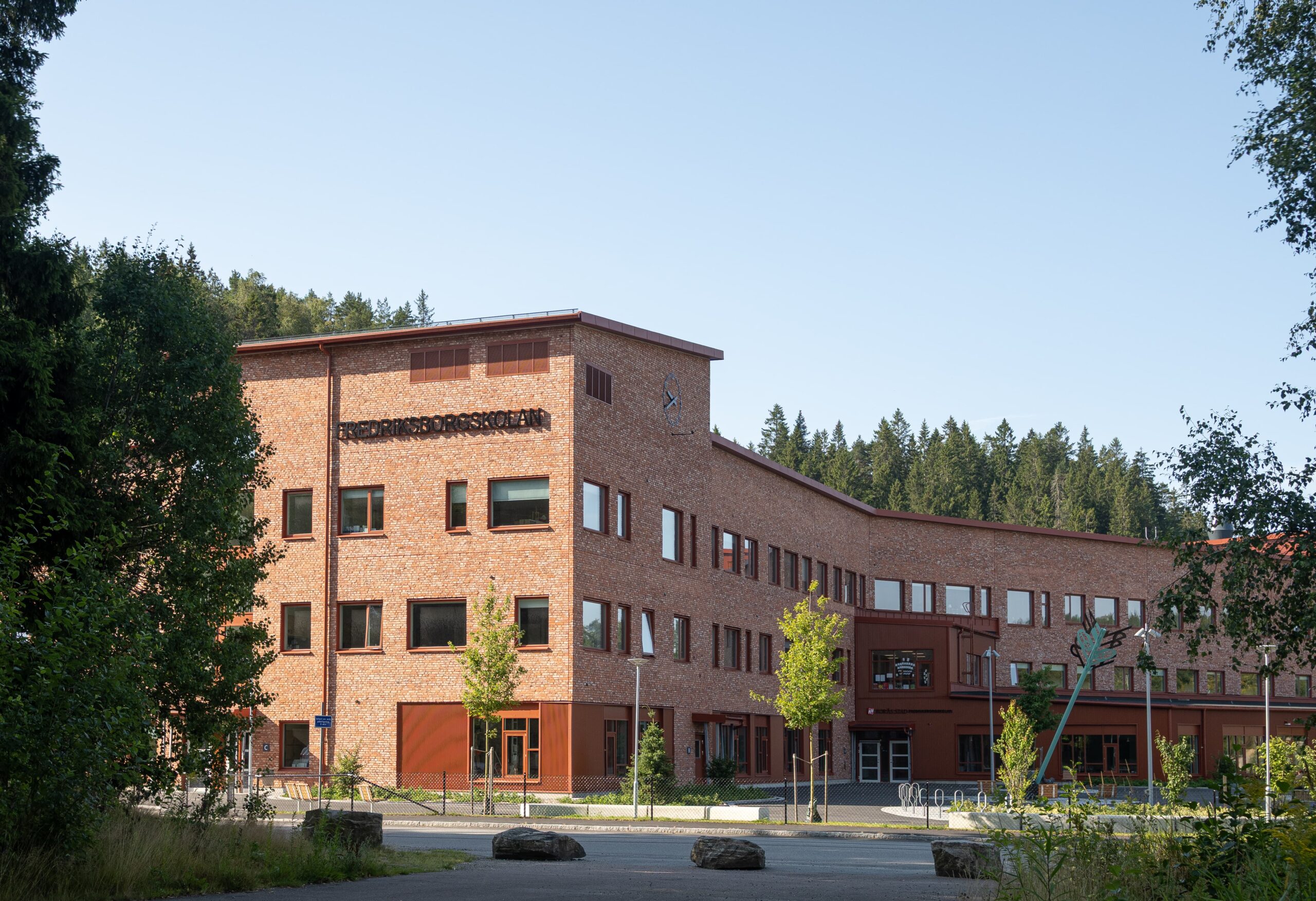
At Fredriksborg School, completed in autumn 2024 and designed for 850 students from preschool through ninth grade, recycled red brick from a former school is reused across 2,300 square meters of façade. This approach results in an estimated saving of around 107 tons of carbon dioxide compared to the use of new bricks. The project uses Rebrick 90 Massiv Rödmix bricks in a 250 × 90 × 65 mm format.
The three-story building spans approximately 13,000 square meters and integrates additional low-impact strategies, including solar panels, eco-friendly concrete, and recycled foam insulation.
Architect: Fredblad Arkitekter, in collaboration with Skanska and the City of Borås.
This project comprises a new sports hall for Emausskolan, completed in late 2023, built with a focus on durable, low-impact materials. The base of the pavilion is clad with Rebrick 57 Massiv Rödmix bricks (250 × 57 × 65 mm), laid horizontally. Reusing these bricks reduces the façade’s environmental impact while preserving traces of past graffiti, allowing fragments of the site’s history to remain visible in the new building.
Architect: Archus Arkitekter, in collaboration with Byggdialog, Front, and the City of Västerås.
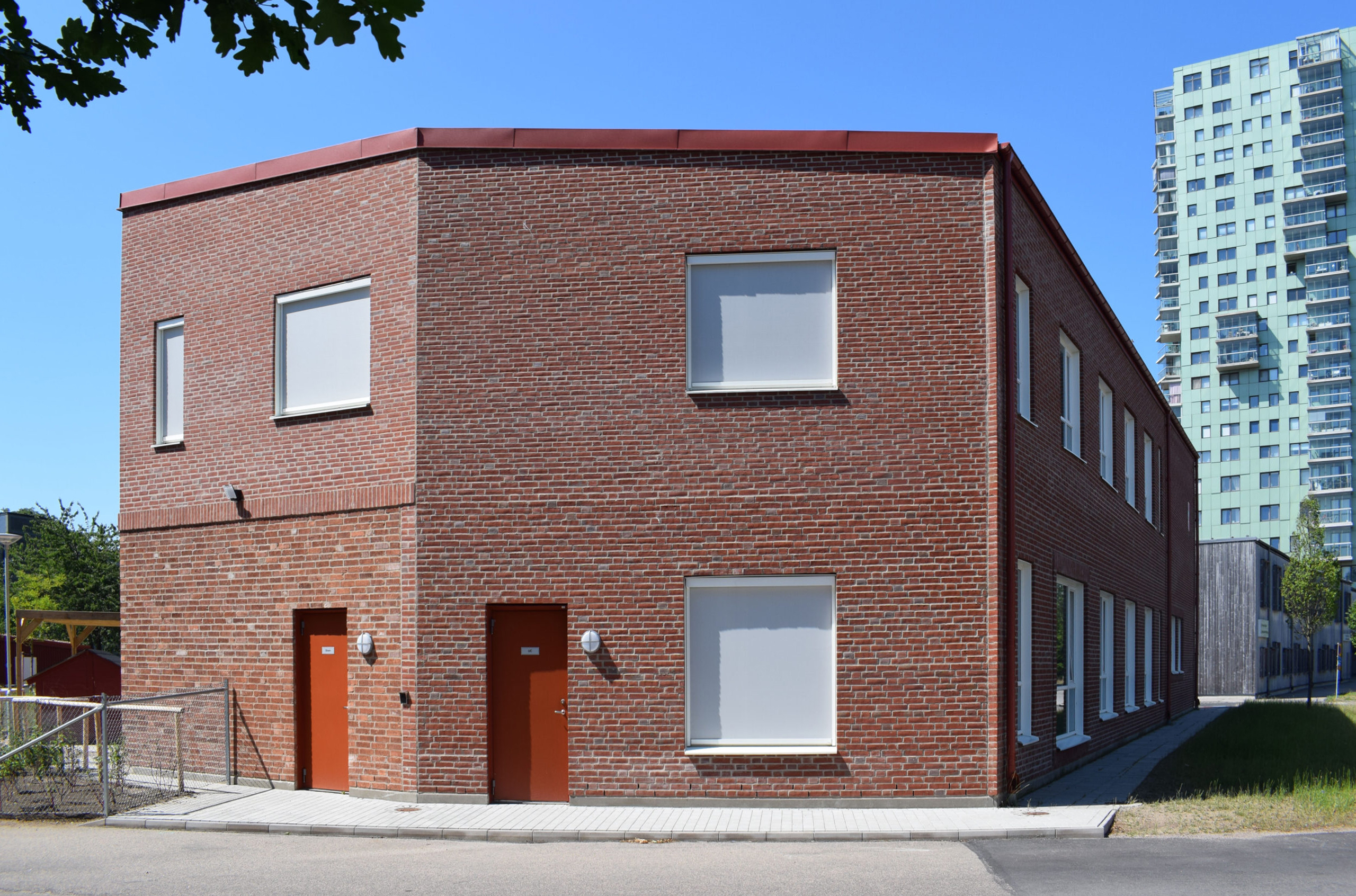
Developed as a pilot project and completed in late 2022, Villa Canzonetta Preschool explores reuse and alternative resources through an interdisciplinary collaboration. The building combines newly manufactured bricks with recycled hollow bricks (Rebrick hålsten rödmix, 250 × 120 × 60 mm), recovered from a former public housing complex built in the 1960s and 70s in Helsingborg’s Drottninghög district.
With a total floor area of approximately 1,370 square meters, the project also incorporates a range of reused elements, including LED and exterior lighting, bicycle racks, sinks, garage doors, and interior fixtures.
Architect: Chroma Arkitekter, in collaboration with Helsingborgshem, Skanska, and Hoti Bygg & Fasadteknik.
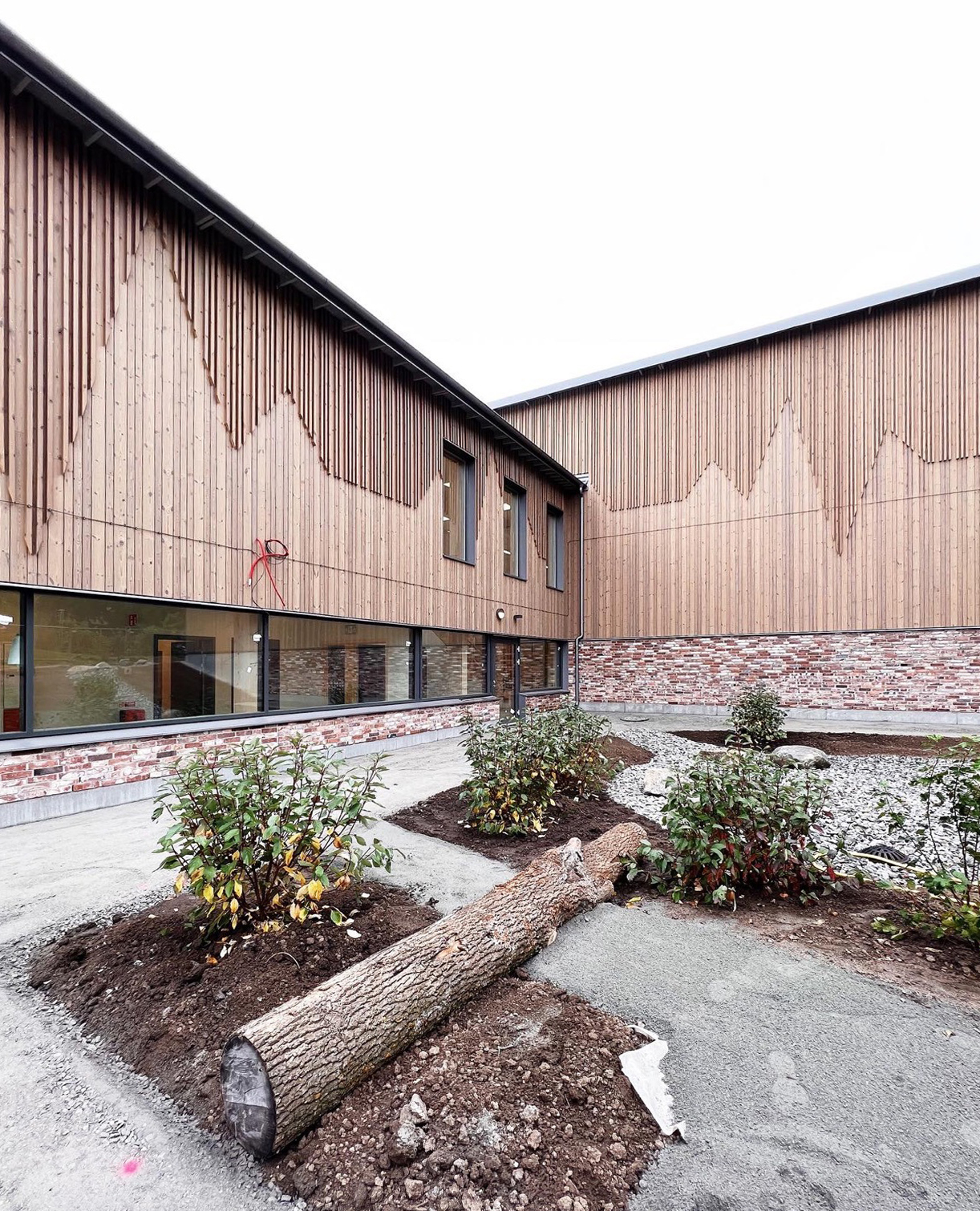
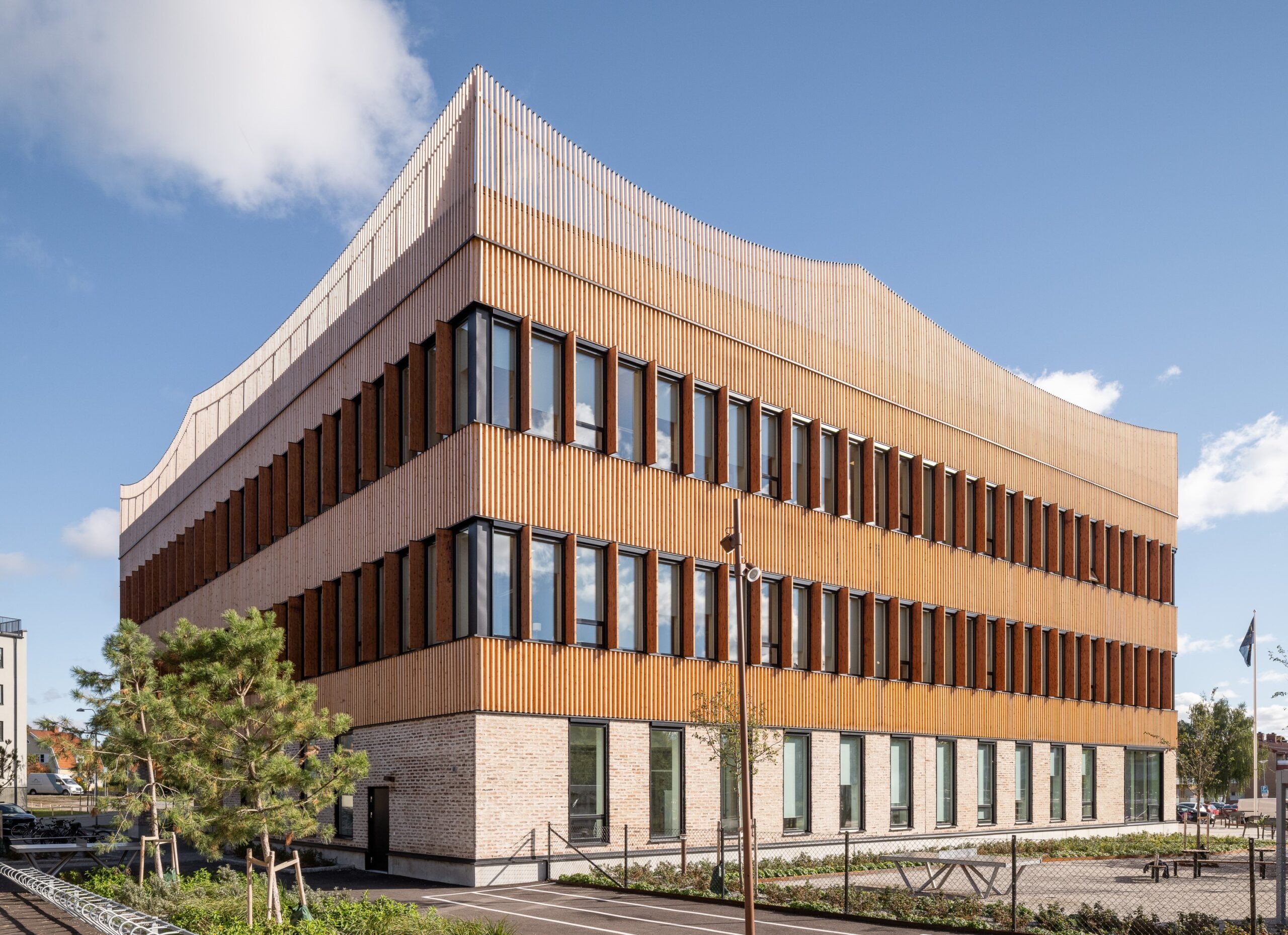
The façade of Ryttersborgsskolan, completed in mid-2024, combines a wooden lattice and a continuous band of windows with a ground floor clad in recycled Rebrick 57 Massiv Rödmix bricks (250 × 57 × 65 mm). Designed to accommodate approximately 860 students, the school has a total floor area of around 8,200 square meters.
The reused bricks visually anchor the building, complementing the wooden slats of the upper floors through a palette of earthy tones ranging from terracotta and brown to beige.
Architect: Archus Arkitekter, in collaboration with Hemsö, HMB, and the City of Västerås.
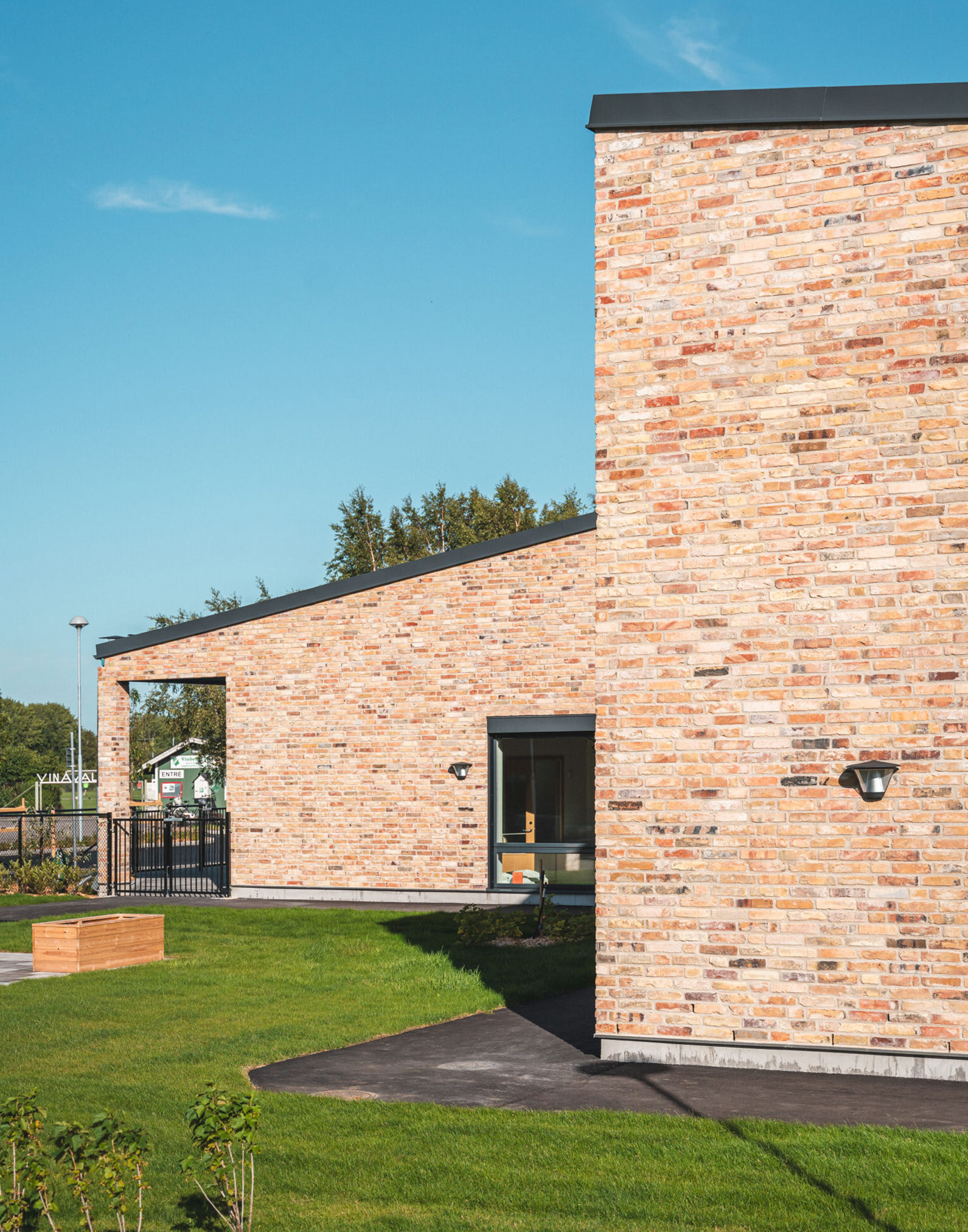
Completed in September 2025 and designed to accommodate 60 children across four sections, the project uses approximately 18,000 recycled yellow bricks across its exterior façades. The bricks—Rebrick 90 Massiv Gulmix in a 250 × 90 × 65 mm format—create a consistent yet lively façade, with subtle variations in tone used to accentuate specific areas.
Architect: Sköld Forsberg, in collaboration with Karlsberg Mur & Puts and the Municipality of Falkenberg.
Smart material choices like these can dramatically reduce a building’s carbon footprint. However, they only become seamless, efficient, and repeatable when teams work from a single source of information.
At revalu, we created Spaces to support exactly that: a shared environment where architecture teams centralize material knowledge, organize project data, and collaborate in real time.

.png)
.png)
.png)
.png)
.png)
.png)






.png)
.png)
.png)
.png)
.png)
.png)
.png)
.png)
.png)
.png)
.png)
.png)
.png)
.png)
.png)
.png)
.png)
.png)
.png)
.png)
.png)
.png)
.png)
.png)
.png)
.png)
.png)
.png)
.png)
.png)
.png)
.png)
.png)
.png)
.png)
.png)
.png)
.png)
.png)
.png)
.png)
.png)
.png)
.png)
.png)
.png)
.png)
.png)