.jpg)
Renovating and upgrading the energy performance of existing buildings can often be a more effective strategy than building new. The renovation of the Omloop Farmhouse by hé! architectuur in Belgium's Pajottenland region offers a compelling example.
Across Flanders, thousands of fermette houses built during the late 20th century continue to shape the rural landscape. Yet changing expectations around energy efficiency, spatial quality, and the relationship between architecture and nature have left many of these homes struggling to meet contemporary needs.
.jpg)
The owners purchased the house in the 1990s and raised their two daughters there. As they began planning for the next stage of their lives, they wanted to remain in the home while improving its comfort, performance, and connection to its surroundings. Although the house held significant emotional value, its layout had gradually become disconnected from the landscape and relied on outdated spatial and heating systems.
Rather than replacing the building, the architects explored how one of Flanders' most common housing typologies could be adapted for contemporary living.
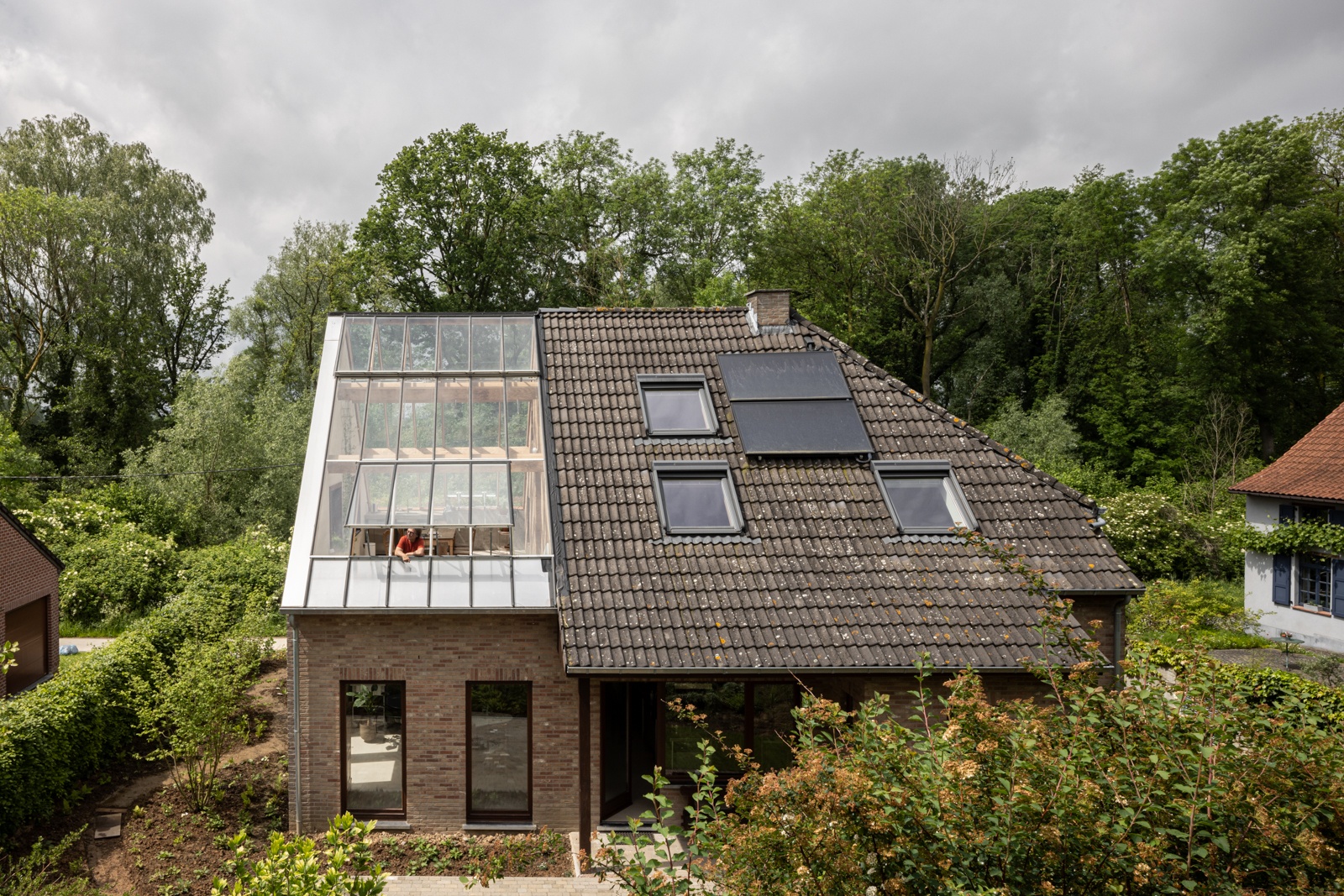
After analyzing the existing structure, they chose not to expand the house. Instead, the project focuses on making the existing footprint more efficient while strengthening the relationship between indoor and outdoor spaces.
One of the most significant interventions transforms the daughters' former bedrooms into a winter garden. At its center stands a thick rammed-earth wall that serves both architectural and environmental functions. Its thermal mass absorbs solar heat during colder months and gradually releases it back into the house, while helping moderate indoor temperatures during warmer periods.
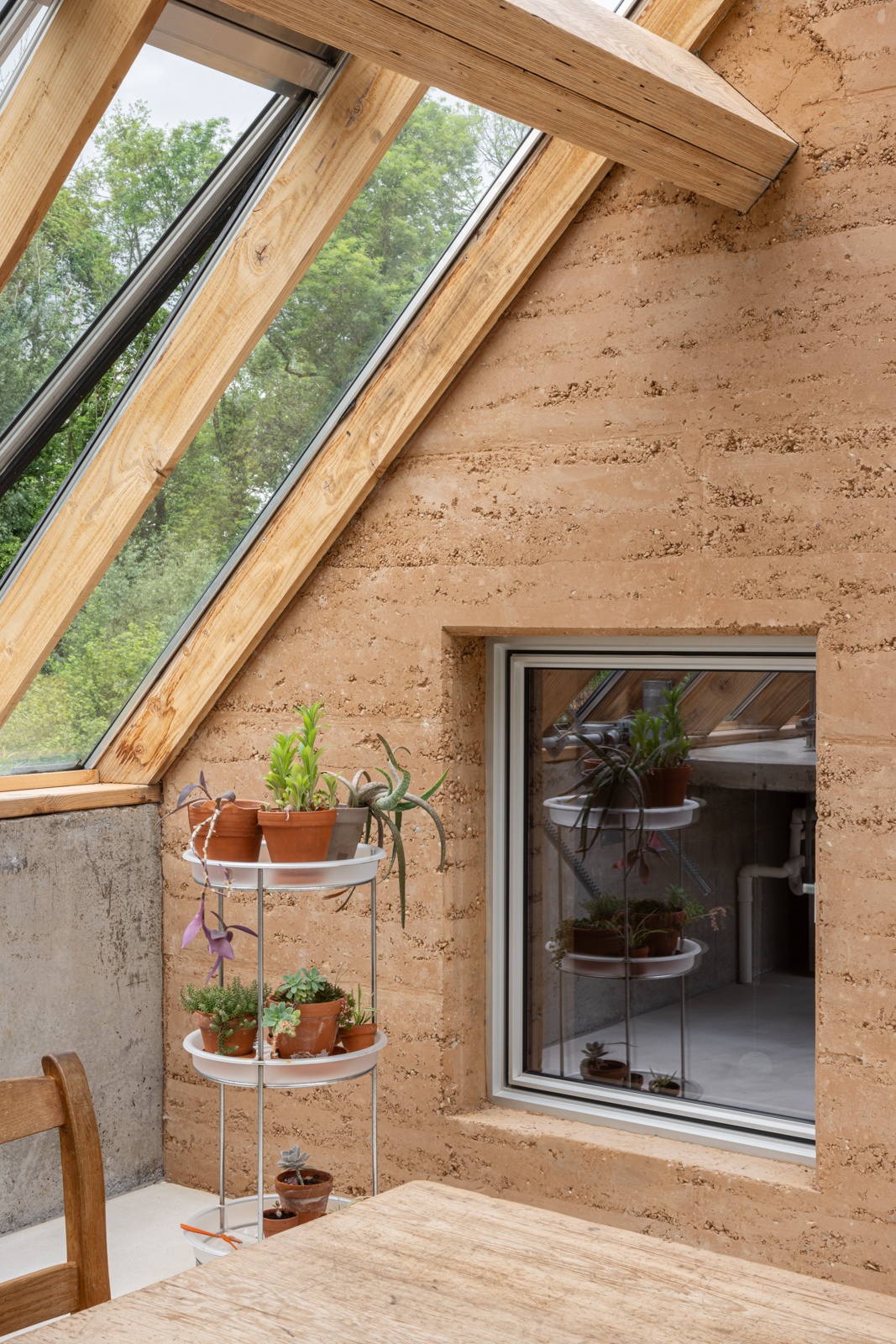
The reconfiguration continues throughout the interior. A former hallway and office become an expanded living area connected to the winter garden. The large entrance hall is reimagined as a more intimate gathering space organized around a clay stove, which replaces the previous oil heating system and now serves as the home's primary heat source. The former garage becomes the new entrance, while white interior finishes are replaced with clay plaster, introducing natural textures and contributing to indoor comfort.

Rather than relying on demolition and new construction, Omloop Farmhouse demonstrates how existing housing stock can be adapted through strategic spatial interventions and natural materials. Rammed earth, clay plaster, and a low-temperature heating system work together to improve thermal performance while creating a home better suited to contemporary needs—and to the lives of its occupants in the years ahead.

.png)
.png)
.png)
.png)
.png)
.png)














.png)
.png)
.png)
.png)
.png)
.png)
.png)
.png)
.png)
.png)
.png)
.png)
.png)
.png)
.png)
.png)
.png)
.png)
.png)
.png)
.png)
.png)
.png)
.png)
.png)
.png)
.png)
.png)
.png)
.png)
.png)
.png)
.png)
.png)
.png)
.png)
.png)
.png)
.png)
.png)

.png)
.png)
.png)
.png)
.png)
.png)
.png)
.png)