.jpg)
Dinorah Martinez Schulte is a Mexican architect, professor, and researcher whose work operates at the intersection of technology, material culture, and architectural production. Educated across Mexico, Switzerland, and the United States—including a Master’s in Architecture and Digital Fabrication at ETH Zurich and research experience at the Norman Foster Foundation’s Robotic Atelier—her perspective is shaped by both global exposure and local realities.
This dual position informs a central tension in her work: while innovation in architecture is often driven by global narratives and technological progress, its application remains deeply local. Currently pursuing a PhD at the University of Florida and directing MANUFACTURA—a research initiative she founded in 2022—her work examines how emerging construction technologies, such as digital fabrication, interact not only with environmental and economic systems, but also with social and cultural contexts, particularly in Latin America.

My work today is driven by my PhD research at the University of Florida’s Share Lab, where I work alongside Dr. Karla Saldaña Ochoa, a specialist in human-centered AI and digital fabrication. It’s an opportunity to engage in in-depth research in close collaboration with academia.
While there is extensive research on the ecological and economic impacts of sustainability and 3D printing in construction, my literature review revealed that very little attention has been given to the social and cultural dimensions. Most of this research is developed in the Global North—such as the U.S., Europe, and Asia—but almost none in Latin American countries like Mexico.
My work seeks to address this gap and deepen the understanding of how emerging construction technologies influence society and culture.

For me, sustainability is not just about reducing CO₂ emissions or implementing circular economy systems. It is about addressing local challenges and truly understanding the context you are working in.
This includes identifying local resources and making informed decisions about which materials and construction systems can engage and support the local community, rather than simply replacing human work with machines.
The biggest challenge is resisting the pressure to follow global trends—for example, assuming that earth construction or other “sustainable” techniques can work everywhere—and instead deeply understanding your context to make decisions that are genuinely aligned with a sustainable reality.
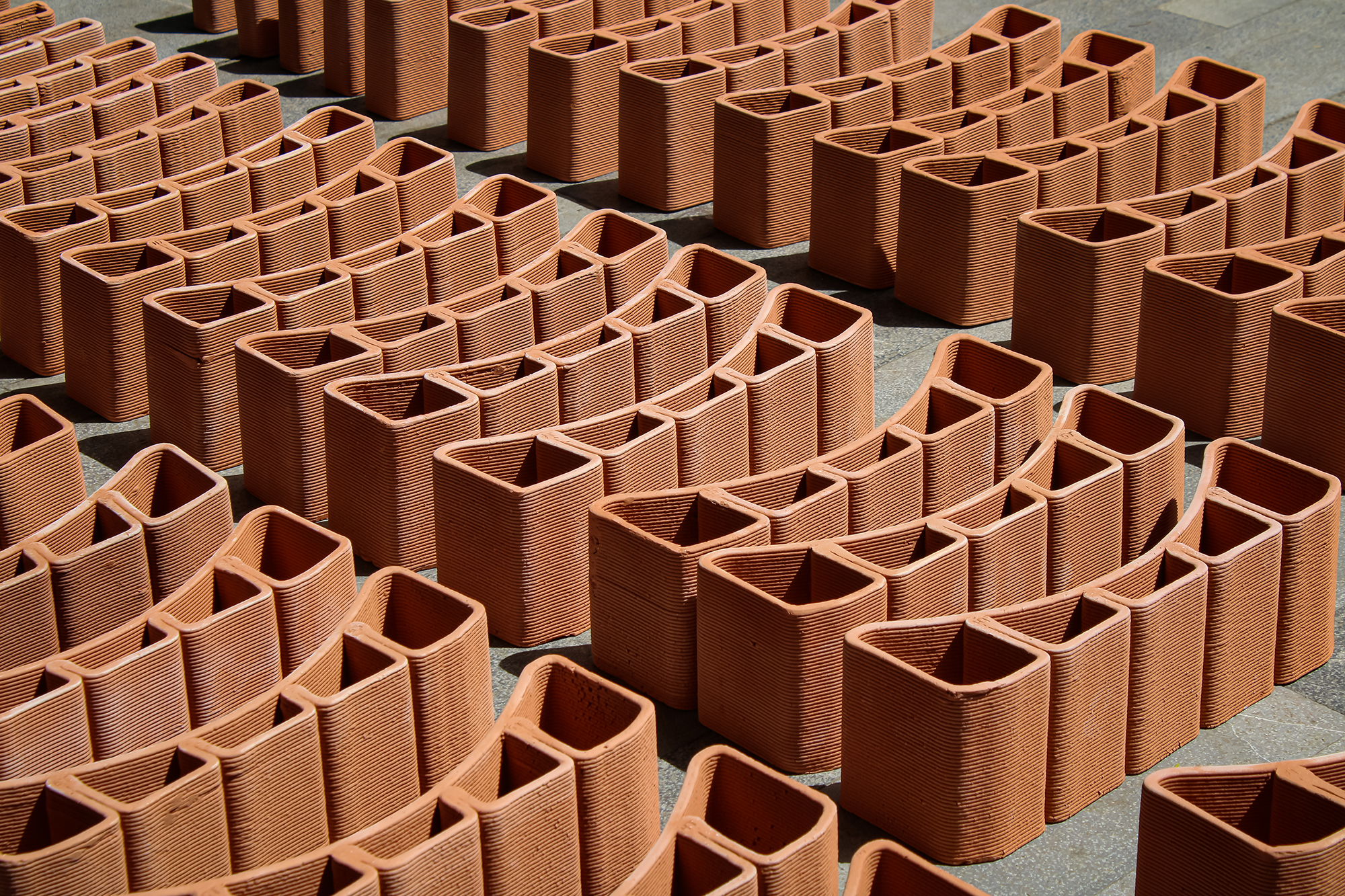
We are experiencing a material revolution in the AEC industry. Many innovative materials are already ready for practical use, but the main challenges lie in public policy and in the dominance of global monopoly companies—such as major concrete producers—that limit the growth of alternative markets.
To overcome this, it is essential to build strong, strategic alliances guided by clear principles. However, achieving this is a significant challenge, and without it, the vision for a more diverse and sustainable material landscape remains largely unrealized.

Two very important points come to mind, the first being the main reason I am pursuing a PhD.
Any construction material in Mexico—or anywhere in the world—must be certified, and certification is not just a technical datasheet. It involves passing through several strict steps with accredited organizations in each country, verifying the material's physical and chemical properties, and meeting structural performance standards. This applies not only to structural materials but also to non-structural components.
There are specific values and requirements established by construction regulations, and this is precisely what I am working on in my PhD. Doing this independently would require enormous financial and infrastructural resources, which are almost impossible to access without an academic partnership. In Mexico, there are no ready-made laboratories or sufficiently trained faculty to reach these kinds of results, whereas in the U.S. there is greater knowledge and expertise.
For this reason, we are currently constructing a 3D-printed building on the university campus using a COBOD3 printer, as a pilot project that can later be implemented in Mexico. The core of my thesis is to obtain results that allow these materials to be commercialized in a tangible and legal way, so that clients can feel confident and secure when using them.

I always say that the future will not look the same everywhere. We can no longer globalize the past, present, or future—each country and region has its own challenges, context, and solutions.
While it is impossible to predict exactly what the built environment will look like, it is possible to prepare for it. In Mexico, for example, the preservation of cultural heritage is central to our societal identity. Many skilled artisans are considered part of this heritage, as their knowledge is passed down through generations without formal education.
In this context, large-scale 3D printing with crane-mounted machines does not necessarily make sense. Its impact can even be negative if it replaces existing systems of knowledge and labor.
We must approach human work with greater sensitivity, fostering collaboration rather than replacement. To achieve this, we need to develop new scales of economy and construction systems—an effort we are actively pursuing through MANUFACTURA.
Explore more of Schulte’s work at MANUFACTURA and read other interviews in our journal.

.png)
.png)
.png)
.png)
.png)
.png)


.png)
.png)
.png)
.png)
.png)
.png)
.png)
.png)
.png)
.png)
.png)
.png)
.png)
.png)
.png)
.png)
.png)
.png)
.png)
.png)
.png)
.png)
.png)
.png)
.png)
.png)
.png)
.png)
.png)
.png)
.png)
.png)
.png)
.png)
.png)
.png)
.png)
.png)
.png)
.png)
.png)
.png)
.png)
.png)
.png)
.png)
.png)
.png)
.png)
.png)
.png)
.png)
.png)
.png)










.png)






.png)