
.jpg)
When discussing low-impact materials, flooring does not always receive the attention it deserves. Yet floor finishes cover large surface areas and can play an important role in reducing embodied carbon while contributing to durability, comfort, and design quality.
Many bio-based flooring materials contain carbon captured during plant growth, which can remain stored within buildings throughout their service life. The following examples highlight a range of renewable flooring solutions, some of which contribute to long-term biogenic carbon storage while also offering durability, comfort, and design quality.
.jpg)
Hjælmø by a:gain combines reclaimed timber with an end-grain construction, where the visible surface exposes the ends of the wood fibres rather than their length. This orientation creates a highly durable surface capable of withstanding heavy use while producing a distinctive visual character defined by the tree's growth rings.
By utilizing reclaimed timber that might otherwise become waste, the flooring extends the life of existing resources while reducing demand for virgin materials.
Explore the material behind the pattern.

HempWood transforms rapidly renewable hemp fibres into a dense flooring material designed as an alternative to conventional hardwood products. Because hemp reaches maturity much faster than most timber species, it offers a renewable feedstock for interior applications while retaining the biogenic carbon captured during plant growth.
Its flooring products combine the appearance of traditional hardwood with a rapidly renewable raw material and are manufactured without added VOCs, demonstrating how agricultural fibres can be engineered into durable interior finishes.
See how hemp becomes flooring.

Combining a wood surface with integrated cork layers, Wicanders Wood Natural is a flooring system that offers durability, comfort, and acoustic performance. In addition to contributing an organic, mottled texture, the cork layers help absorb impact and reduce footstep noise by up to 67%, while also improving walking comfort.
Cork is harvested from the bark of cork oak trees without felling them, allowing the material to regenerate multiple times throughout the tree's lifespan.
Explore cork's acoustic performance.

Holse & Wibroe's Bamboo Wood Composite flooring combines a surface layer of bamboo strips with a multi-layer wood core, improving dimensional stability and durability. Made from Phyllostachys edulis, a rapidly renewable bamboo species native to China, the flooring features a subtle linear grain pattern and natural appearance.
In addition to its renewable resource base, bamboo flooring can contribute to thermal and acoustic comfort while offering an alternative to conventional hardwood products.
Discover the properties of bamboo flooring.

Linoleum is one of the longest-established resilient flooring materials still widely used today. Tarkett Lino is manufactured using 94% natural raw materials, including linseed oil, wood flour or cork, and natural resins.
Available in a wide range of colors, it allows designers to create graphic, monochromatic, or highly expressive interior surfaces. Widely specified in schools, healthcare facilities, and public buildings, the material also incorporates an xf²™ surface treatment that improves durability while simplifying cleaning and maintenance.
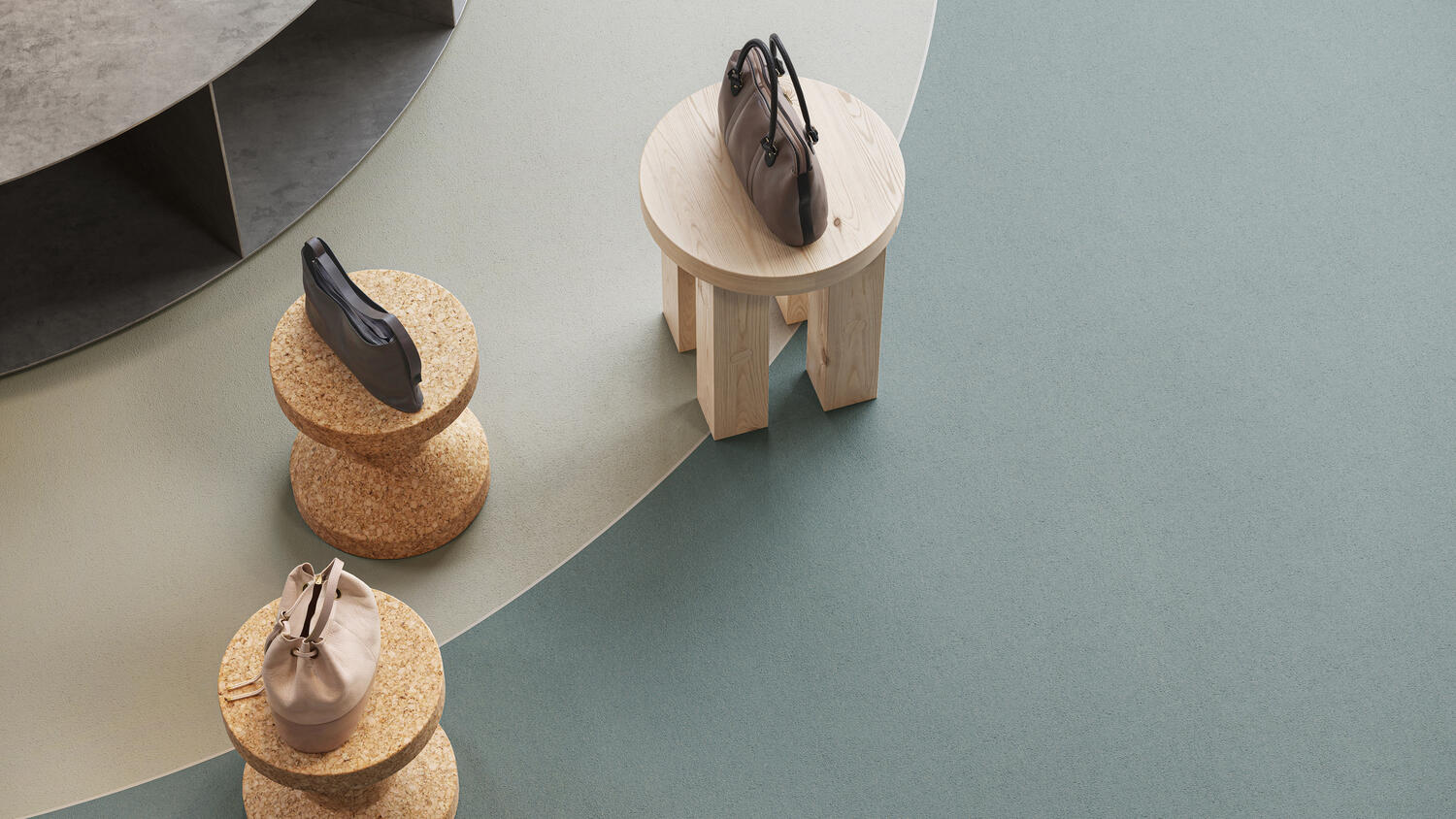
For architects and designers seeking functional and aesthetically appealing interior solutions, these examples highlight the growing range of bio-based flooring materials available today. From reclaimed timber and agricultural fibres to cork, bamboo, and linoleum, alternative options are increasingly capable of meeting both design and performance requirements.
In many cases, exploring materials beyond conventional specifications can make a meaningful difference to the environmental impact, character, and comfort of interior spaces.
Explore more flooring materials and product data through revalu's free materials platform.

.png)
.png)
.png)
.png)
.png)
.png)












.png)
.png)
.png)
.png)
.png)
.png)
.png)
.png)
.png)
.png)
.png)
.png)
.png)
.png)
.png)
.png)
.png)
.png)
.png)
.png)
.png)
.png)
.png)
.png)
.png)
.png)
.png)
.png)
.png)
.png)
.png)
.png)
.png)
.png)
.png)
.png)
.png)
.png)
.png)
.png)
.png)
.png)
.png)
.png)
.png)
.png)

.png)
.png)
.png)
.png)
.png)
.png)
.png)
.png)











.png)








.png)