
.jpg)
Every time the FIFA World Cup takes place, millions of people turn their attention to the stadiums hosting the world’s biggest football tournament. Beyond the matches themselves, these venues highlight a growing challenge facing the construction industry: delivering highly complex projects while responding to increasing expectations around embodied carbon, material transparency, and life-cycle performance. With large multidisciplinary teams, extensive supply chains, and demanding structural requirements, stadiums provide a useful lens through which to explore different material strategies.
While no single project offers all the answers, the following examples highlight four different strategies being explored in sports infrastructure as the industry responds to evolving regulations, environmental goals, and growing expectations around material performance: from material recovery and reuse to recycled content, material efficiency, and mass timber construction.
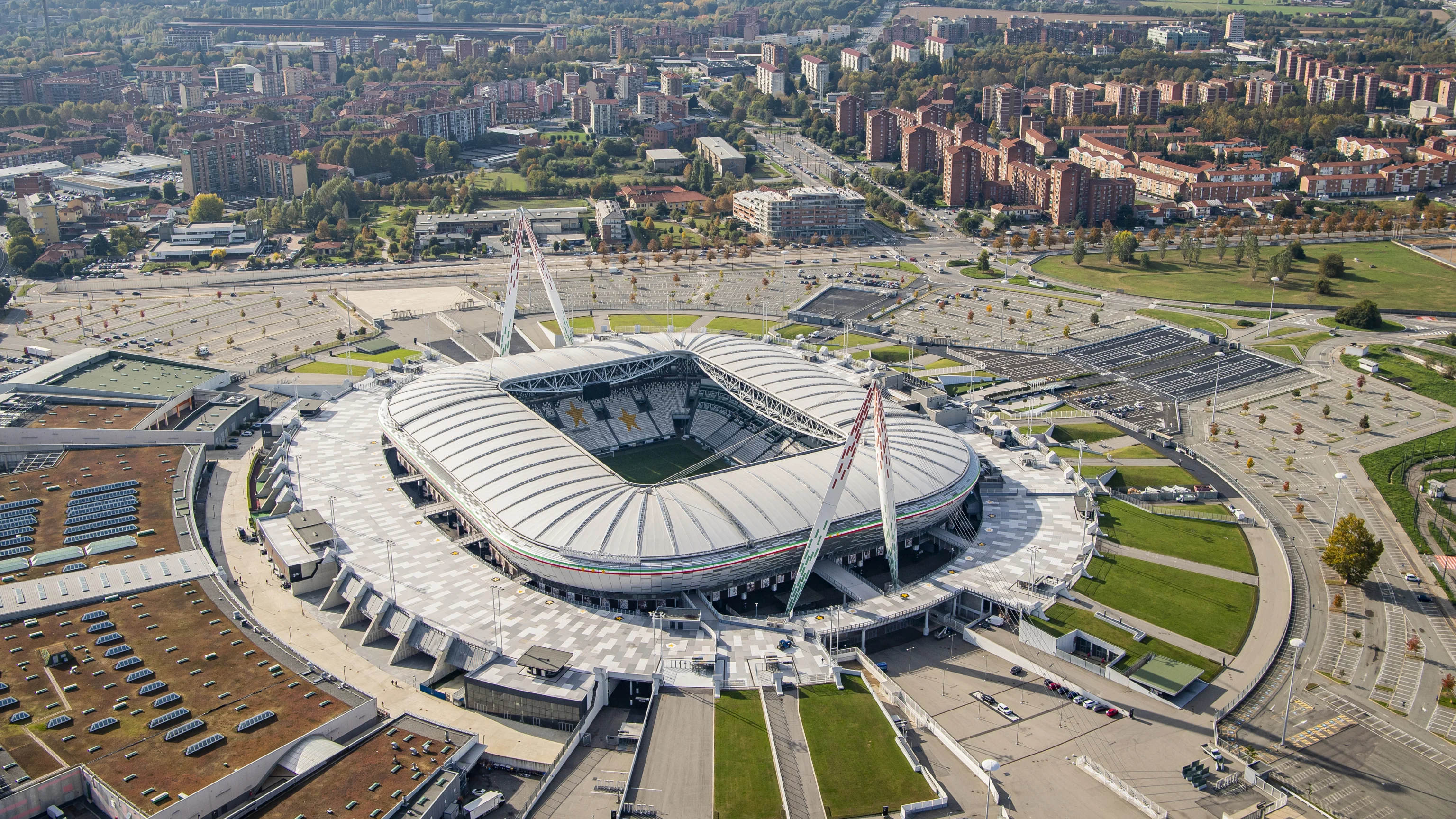
Built on the site of the former Stadio delle Alpi in Turin, Italy, the Juventus Stadium (now Allianz Stadium) stands out for its extensive reuse of materials from the original venue. Rather than becoming waste, large quantities of concrete, steel, glass, and aluminum were recovered and incorporated into the new development, reducing the need for virgin materials.
Designed by Studio GAU (Gino Zavanella) and Studio Shesa (Hernando and Eloy Suárez), the project reused approximately 40,000 m³ of concrete, 5,000 tonnes of steel, 2,000 m² of glass, and 300 tonnes of aluminum from the former stadium. The stadium also incorporates photovoltaic panels, solar thermal systems, rainwater harvesting, and energy-efficient lighting, combining material reuse with broader resource-efficiency measures.
Explore Circular Material Solutions
Designed by Fenwick Iribarren Architects for the FIFA World Cup in Qatar, Education City Stadium incorporated recycled content in approximately 29% of its construction materials, while nearly 85% of the materials were sourced locally. Together, these strategies helped reduce resource consumption and transportation-related impacts during construction.
The stadium was also designed to respond to Doha's extreme climate. Its form, facade, and cooling systems help create a more comfortable microclimate for players and spectators. In addition, a modular section of seating was designed to be removed after the tournament, allowing the stadium's capacity to be reduced and better aligned with future demand.
Discover Materials with Recycled Content

Built on the site of the former White Hart Lane in London, England, the Tottenham Hotspur Stadium incorporates alternative cementitious materials and structural optimization strategies within a large-scale sports venue. While concrete remains a key structural material, the project combines material specification and engineering strategies aimed at improving resource efficiency.
Designed by Populous, the stadium used more than 9,000 precast concrete elements containing 36% ground granulated blast-furnace slag (GGBS) as a partial replacement for Portland cement. The structure was also engineered to use concrete efficiently, with optimized stands, long-span structural elements, and post-tensioned slabs helping minimize material use while maintaining large column-free spaces.
See Low-Carbon Concrete Alternatives

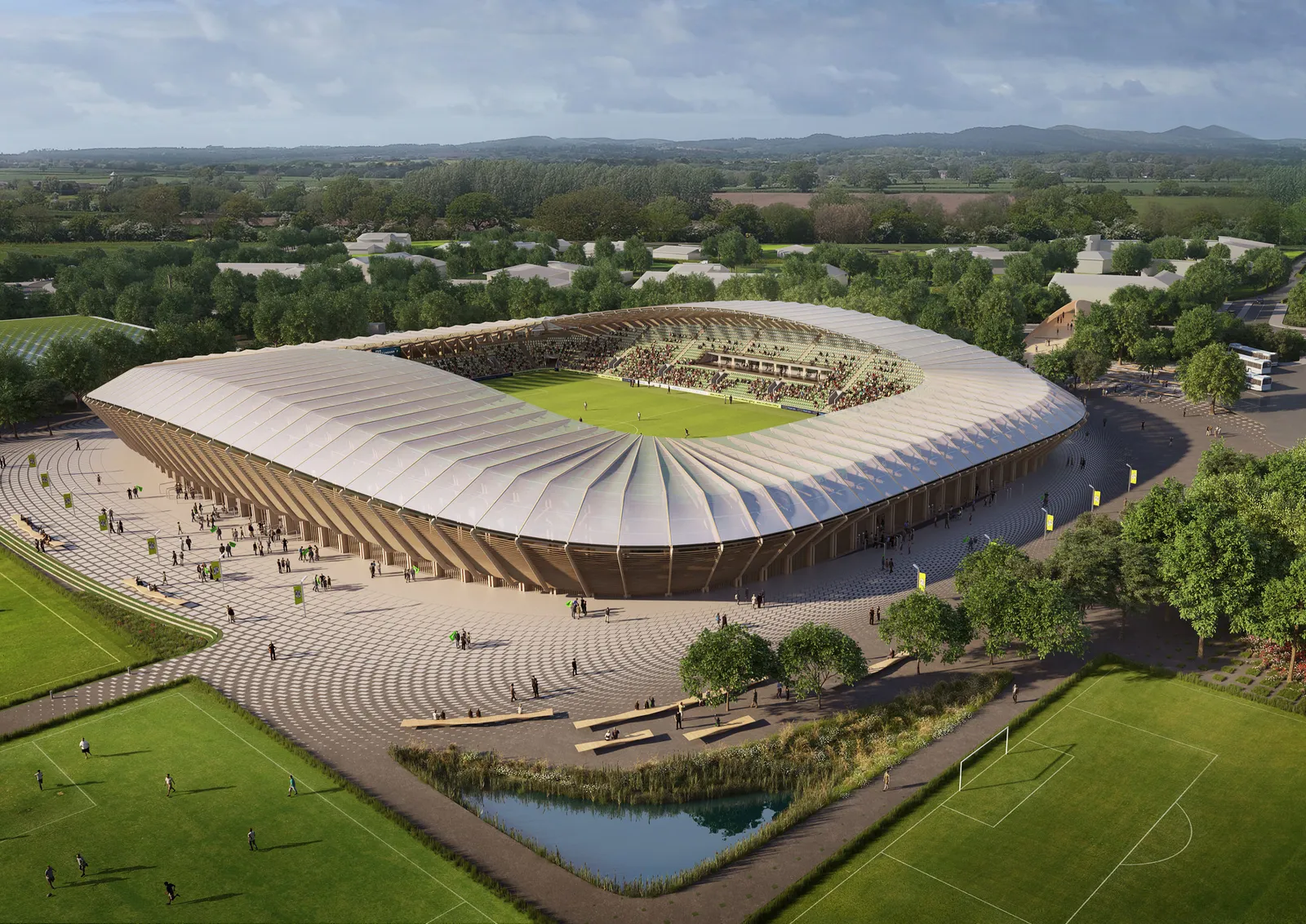
Although not yet built, the Eco Park Stadium was designed as a predominantly timber football stadium, with sustainably sourced timber proposed for much of its structure, roof, and external envelope.
Designed by Zaha Hadid Architects for Forest Green Rovers in Gloucestershire, England, the project features a lightweight transparent membrane roof to maximize natural daylight, while the façades combine timber elements with glazed sections. Intended to operate using renewable energy sources, the proposal has become a widely cited example of how mass timber could be applied to large-scale sports infrastructure.
While these projects take different approaches, they illustrate a broader shift taking place across the construction industry. Across different contexts and project requirements, designers and engineers are exploring multiple ways to reduce environmental impact, from recovering existing materials and improving structural efficiency to incorporating recycled content and renewable alternatives such as mass timber.
As expectations around embodied carbon, material transparency, and life-cycle performance continue to grow, material decisions are becoming an increasingly important part of the design process. Stadiums may represent some of the industry's most complex projects, but the strategies explored here are equally relevant across a wide range of building types and scales.
Find more material solutions for lower-impact construction on revalu.

.png)
.png)
.png)
.png)
.png)
.png)














.png)
.png)
.png)
.png)
.png)
.png)
.png)
.png)
.png)
.png)
.png)
.png)
.png)
.png)
.png)
.png)
.png)
.png)
.png)
.png)
.png)
.png)
.png)
.png)
.png)
.png)
.png)
.png)
.png)
.png)
.png)
.png)
.png)
.png)
.png)
.png)
.png)
.png)
.png)
.png)
.png)
.png)
.png)
.png)
.png)

.png)
.png)
.png)
.png)
.png)
.png)
.png)
.png)











.png)










.png)